Clara’s Verdict
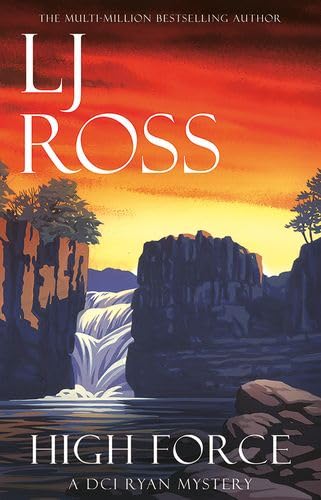
The fifth DCI Ryan Mystery opens with the worst thing that could happen to this particular detective, which is the return of the man he already caught once at enormous personal cost. The Hacker has escaped prison, and what he does with his freedom is take one of Ryan’s own detectives from her home.
It is a strong hook and LJ Ross plays it hard. Ross gives it eight hours and forty-seven minutes, a nationwide manhunt, a trail already gone cold and a countdown the copy is in no way shy about naming. This reads to me as a pursuit thriller far more than the “fast-paced crime whodunit” the copy calls it, and the rating suggests the readership is not complaining about the difference.
About the Audiobook
The setup is stated without ceremony. DCI Ryan’s “worst nightmare has just become a reality”: the notorious serial killer known as The Hacker has escaped prison and taken one of Ryan’s best detectives “from her own home”. The history behind it matters. Ryan “lost his sister and nearly his own life bringing the man to justice first time around”, which means the pursuit is personal before a single procedural step has been taken. Meanwhile “the trail has gone cold and fear spreads like a virus”, and a national search runs alongside a private one.
That personal history is also the crux of the reading-order question. Book five of the DCI Ryan Mysteries can certainly be followed as a self-contained manhunt, because the plot explains itself as it goes. What it cannot do is generate the emotional charge of a sister’s death and a near-fatal first encounter out of one summary sentence. My honest advice is that you can begin here and enjoy it, but you will be listening to the sequel to a book you have not read, and the cost falls entirely on the emotional register rather than on comprehension.
Audible Studios released this on 4 April 2017, it runs eight hours and forty-seven minutes, and the copy sets it amidst the Northumbrian landscape even as the manhunt runs nationwide.
The Narration
The reading is credited to Jonathan Keeble. What I would want to test in a sample here is not clarity or pace but tonal control, because the publisher’s own description promises a story in which murder and mystery are “peppered with romance and humour”. Set that against a premise involving a serial killer, an abducted colleague and a ticking clock, and you have a book that must swing between real dread and warm ensemble comedy, sometimes inside the same chapter.
Managing that swing is among the hardest things a narrator can be asked to do in commercial crime fiction. Play the dread too heavily and the lighter material sounds tasteless. Play the warmth too broadly and the threat evaporates. What a listener wants is a reader who can hold a low, steady tension underneath the banter, so that the team’s affection for one another registers as the thing at stake rather than as a change of subject.
The running time is well judged for a pursuit narrative, long enough for the search to feel like a search and short enough that the pressure never slackens. I would take this one in fewer and longer sittings than I would give a puzzle mystery. Momentum is the point, and stopping every twenty minutes works directly against it.
What Readers Say
4.6 from 50,598 ratings, and what strikes me about the written reviews is that two of the three are not really about this book at all. They are about the series.
Sarah Callaway’s five-star review consists of a single line: “Beautifully written fantastic books one and all”. Note the plural. Mrs H., also at five stars, writes of “a great series of books” and adds “I can’t put them down”, while making the standalone case outright: on that account the book “can easily be read as a standalone”. It is the strongest evidence in either direction on the reading-order question, and it comes from someone writing about the series as a whole rather than about this book alone.
The remaining four-star review is the one that engages with this instalment specifically, and it is the most interesting of the three: “I think this is the best DCI Ryan book so far”. It qualifies that with “Taken as a work of fiction it is great”, which reads to me as a gentle reservation about plausibility, and then praises the construction, calling the story “fast paced and very clever the way everything links together”, along with the characters and the relationships between them.
No reviewer here mentions the narrator or the listening experience. The 4.6 measures how much readers enjoy LJ Ross’s series, and you should weigh it accordingly.
Who Should Listen?
Followers of the series who have reached book five need no encouragement from me. Beyond them, this suits anyone who likes a thriller with a ticking clock and a personal grudge running underneath it, and anyone who wants British crime that moves quickly without abandoning its characters along the way. The abduction structure gives this instalment far more forward drive than a conventional investigation, which makes it a good companion for a long drive.
Think twice if you are new to the series and care about emotional payoff, because you can follow the plot cold but the weight of the history will pass you by. Think twice as well if serial-killer fiction, abduction and sustained threat to a colleague of the detective’s are things you would rather avoid, since the premise puts a colleague in danger and deliberately keeps her there. Readers who prefer their crime novels contained, domestic and small in scale should know that this is the opposite of that.