Clara’s Verdict
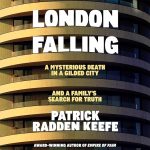
Patrick Radden Keefe is one of the finest narrative journalists working anywhere in the world, and London Falling is his most personal, most London-rooted, and most devastating work yet. Read in Keefe’s own measured, unsparing voice, this audiobook cuts to the very bone of contemporary London – a city that dazzles from the outside and conceals extraordinary darkness within. What begins as the story of a young man’s death becomes something far larger: an excavation of identity, grief, parental love, and the corrosive glamour of oligarch money in a city that has welcomed it for decades without asking many questions. I finished this in two long sittings and spent the following day unable to stop thinking about it. That is the mark of a book that truly matters. The Baillie Gifford Prize-winning author of Empire of Pain and Say Nothing has outdone himself, and the audio format – his own voice, unhurried, precise – is the only way to experience it.
About the audiobook
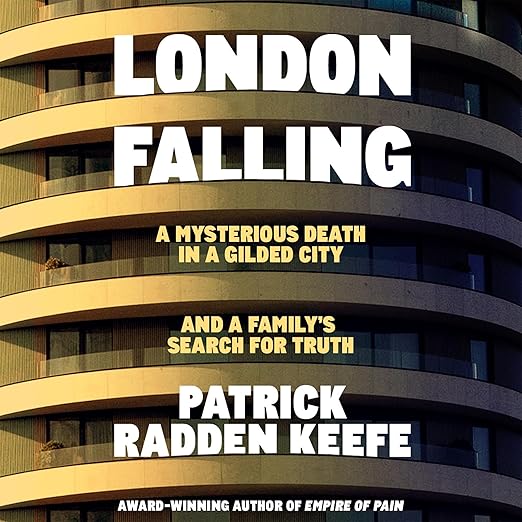
In 2019, a London teenager named Zac Brettler fell to his death from a luxury apartment building on the banks of the Thames. His parents – devastated, bewildered, determined – began to investigate how their son had died. What they uncovered was extraordinary: Zac had been living a double life, posing as the son of a wealthy Russian oligarch and moving on the fringes of a world he had no business entering. The gap between the fantasy he had constructed and the reality of who he was proves to be the gap through which everything falls.
Keefe follows the Brettlers on their harrowing quest for truth with the same scrupulous rigour he brought to the opioid crisis in Empire of Pain and to the Troubles in Say Nothing. The investigation unfolds through layers of London’s gilded underworld: the penthouses along the Thames, the fixers and intermediaries who make such worlds possible, and the dark river of money that flows through the city with few questions asked and fewer consequences imposed. What emerges is not only the story of one young man’s tragedy but a portrait of a metropolis where extreme wealth and extreme vulnerability coexist in closer proximity than any of its beneficiaries care to admit.
Keefe’s central literary achievement is making Zac feel entirely real – not a cautionary headline, not a symbol, but a young man whose longing for belonging and whose capacity for self-invention are achingly familiar. The book asks, with genuine intellectual and moral seriousness, how a city this wealthy can be this careless with its most vulnerable young people. Published by Picador and released in April 2026, it arrives at a moment when questions about dark money in London feel more urgent than at any previous point in recent history.
The narration
Keefe reads his own work, and this is unambiguously the correct choice. His voice is calm, precise, almost academic in register – but there is a controlled grief running beneath every sentence that print cannot convey. The emotional restraint is itself part of the argument: Keefe refuses to dramatise what is already devastating, trusting the facts to carry the weight. When he describes Zac’s parents – their confusion, their love, their determination to understand – that restraint makes the emotional impact land harder than any performed sorrow could. At 12 hours and 59 minutes, the audiobook proceeds with a narrative assurance that makes every chapter feel necessary. There is not a wasted moment in the entire listening experience.
What readers say
Though published in April 2026 and still accumulating listener reviews, advance praise from peers who know good work when they encounter it tells a vivid story of the book’s achievement. Jon Ronson called it “gripping, rigorous, smart… breathtaking.” Emily Maitlis described it as “a phenomenal book that will stay in your soul long after the last page… it captures how easily a life can go wrong in the shadows of a city bankrolled by billionaires.” Sathnam Sanghera, author of Empireland, wrote that it “will break your heart, instil you with cold rage, and make you see London in a completely new light.” These are working writers and journalists of serious standing, not publicists: their enthusiasm reflects genuine recognition of the book’s quality.
Who should listen?
Listeners who loved Keefe’s previous work – Say Nothing, Empire of Pain, Chasing Heroin – need no persuasion. This is the same unflinching intelligence and the same gift for narrative architecture, applied to a story much closer to home. It will also resonate deeply with anyone troubled by the role of foreign wealth in British cities, by youth mental health and the desperate performance of identity that social media enables, and by the gap between how London presents itself and what it actually is. Fans of literary true crime in the tradition of Robert Kolker, David Grann, and Katherine Boo will find a natural companion here. This is not a book for people who want comfort or reassurance. It is a book for people who want the truth, however uncomfortable.
Listen to London Falling on Audible UK and hear one of the most significant British non-fiction audiobooks of the decade.