Clara’s Verdict
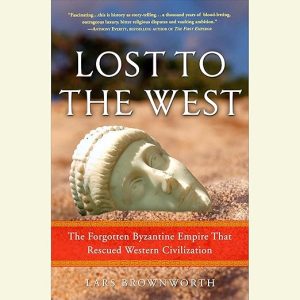
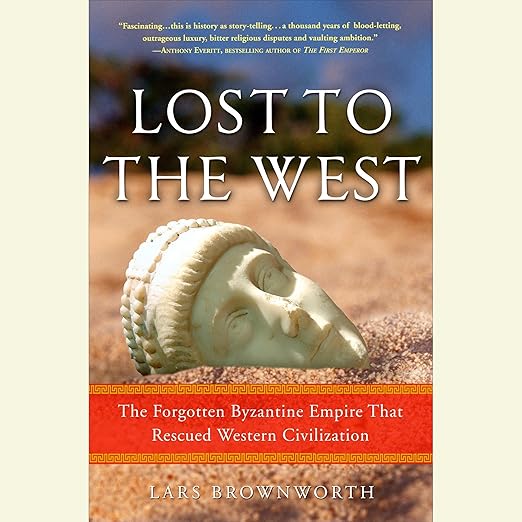
The Byzantine Empire is one of those historical subjects that most people know they ought to understand and few actually do. Lars Brownworth’s Lost to the West exists to fix that, and it does so with considerable skill. This is narrative history in its most readable form: a whistle-stop tour of eleven centuries compressed into ten hours, told with the momentum of a thriller and the conviction of someone who genuinely believes this story matters. It does matter. Byzantium held Christian civilisation together while Europe was in the dark ages, and it did so in ways that are still poorly understood. Brownworth brings the empire to life – its emperors, generals, saints, conspirators, and ordinary citizens – without ever losing sight of the bigger argument.
Is it comprehensive? No, and Brownworth does not pretend otherwise. Is it accurate in every detail? Academics have quibbled. But as an introduction to a millennium of history that is genuinely underserved in popular writing, this is close to essential.
About the Audiobook
Lost to the West spans the entire life of the Byzantine Empire – from the founding of Constantinople as the new Roman capital through its 1453 fall to the Ottoman Turks. Brownworth moves chronologically but with the eye of a storyteller rather than an archivist. He selects the moments that illuminate character and consequence: the theological disputes that split the empire, the extraordinary court intrigues (mass mutilation was a favoured sanction for political rivals), the military genius of commanders like Belisarius, and the repeated near-misses where Constantinople should have fallen but somehow did not.
The book is particularly strong on the empire’s cultural and intellectual legacy – the art, the architecture, the preservation of Greek and Roman learning during Europe’s medieval period. Brownworth makes a compelling case that the Renaissance was made possible, in significant part, by what Byzantine scholars carried westward when Constantinople finally fell. That is a large claim, argued persuasively and without academic overcaution. The prose throughout is accessible and propulsive: this is popular history in the best sense, unafraid to make you care about people who have been dead for a thousand years.
The Narration
Brownworth narrates his own work, which proves an inspired decision. He is clearly animated by his material – the enthusiasm in his voice when describing a particularly improbable imperial comeback or a spectacularly ruthless dynastic murder is palpable and contagious. Author-narrated history tends to succeed or fail based on whether the writer can sustain that engagement over many hours; Brownworth can. His pace is brisk without becoming rushed, and his delivery has the quality of a gifted lecturer: a voice that makes you feel it would be rude not to pay attention.
What Readers Say
UK listeners have responded with consistent warmth, awarding the title 4.6 stars. “Lars Brownworth is an excellent writer that can make a story like this one so captivating,” wrote one reviewer who had visited Istanbul and found the book recontextualised everything they had seen there. Others praised “the history you were never given at school” and called it “absolutely ideal for those who don’t want to be utterly clueless about Byzantium without ploughing through John Julius Norwich’s trilogy.” One reader noted that Brownworth “re-animates the souls of all the Byzantine emperors brilliantly.” A consistent theme is that the book manages to be both informative and entertaining – “great, snappy, well written.”
Who Should Listen?
Anyone with an interest in medieval history, the history of Christianity, or the long story of European civilisation will find Lost to the West rewarding. It is ideal for listeners who have been curious about Byzantium but found the academic literature daunting. Fans of accessible narrative history – Simon Sebag Montefiore, Mary Beard, Tom Holland – will feel at home here. This is ten hours very well spent.
Listen to Lost to the West on Audible UK: Get it on Audible. Also available on Kobo, Scribd, and Storytel.