Clara’s Verdict
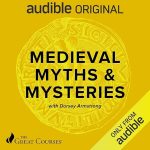
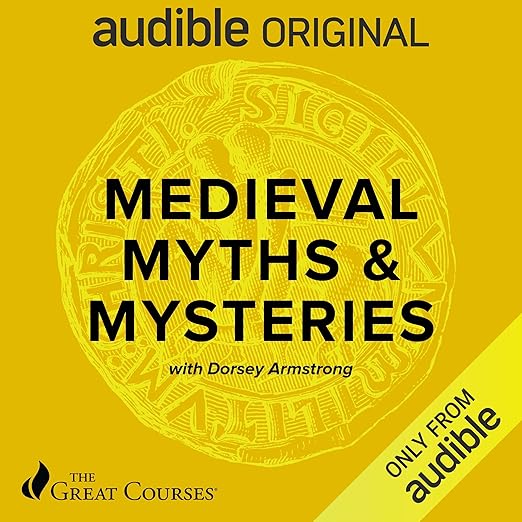
I have a long-standing suspicion of books that promise to debunk popular myths. The genre can collapse into a particular kind of intellectual self-congratulation – spending more energy performing the act of knowing the truth than actually illuminating the period under examination. Professor Dorsey Armstrong sidesteps this trap with real skill. Medieval Myths and Mysteries is an Audible Original, ten lectures totalling just over five hours, and it delivers precisely what the title promises: a systematic, entertaining, and consistently rigorous examination of the stories we continue to tell about the Middle Ages. Armstrong is not interested in making listeners feel embarrassed for having believed the myths. She is interested in what those myths reveal about us, about the later generations who needed the medieval period to be simpler and cruder than it was, and about the ways that popular storytelling persistently overrides historical accuracy in every era.
Only one Audible UK review exists at the time of writing, but it is a five-star response, and the underlying work has earned genuine respect in educational circles far beyond its Audible audience. Armstrong holds a professorship at Purdue University and has delivered the Great Courses lecture series on medieval literature and history – credentials that give this recording a scholarly pedigree most short-form audio content cannot claim.
About the Audiobook
Published as an Audible Original in September 2019, the recording runs to 5 hours and 6 minutes across ten lectures. The range of topics is impressively calibrated. King Arthur receives careful examination – not simply debunked but traced through layers of historical possibility and literary accretion, from the genuine post-Roman chaos that might have given rise to the legend to the thoroughly fictional chivalric creature of the later romances. Robin Hood is similarly unpicked. The Holy Grail is traced as an idea that evolved dramatically over centuries, meaning very different things to very different traditions. The Knights Templar receive a lecture that separates documented history from the conspiracy theories that have accumulated around them for seven centuries. Most valuably, Armstrong addresses the popular understanding of medieval witch burnings with particular clarity: the systematic persecution of hundreds of thousands of women is largely an early modern phenomenon, not a medieval one, and conflating the two distorts how we understand gender, religion, and institutional power in both periods.
What makes the lectures consistently valuable is Armstrong’s insistence that the myths themselves matter and deserve serious examination, not merely dismissal. Why did later generations need these particular stories about the Middle Ages? What does the persistence of the ‘dark ages’ label tell us about Renaissance self-promotion? These are questions worth asking.
The Narration
Armstrong narrates her own lectures, which is an unambiguous advantage. Her ability to hold a room – developed across decades of university teaching – translates directly into the audio experience. She is relaxed without being casual, authoritative without being dry, and her genuine enthusiasm for the material surfaces throughout without ever tipping into the slightly unnerving evangelical mode that some popular history presenters adopt. Self-narrated academic lectures in audio form live or die on whether the speaker can sustain listener engagement without the visual reinforcement of a classroom. Armstrong manages this with obvious ease, and her wit is quick enough to prevent any stretch from feeling like a duty.
What Readers Say
Jill Kirtley, the sole UK reviewer at the time of writing, called the recording ‘an informative and often humorous insight into Medieval Myths and Mysteries,’ noting that it ‘whetted my appetite for more things medieval’ and singling out the narration as particularly strong. The combination of information and humour that Kirtley identifies is the central achievement of the work. Armstrong’s particular skill is that she never lets the corrective impulse – the look-how-wrong-the-popular-version-is – become the point in itself. The myths are treated as interesting objects, worth understanding on their own terms and in their own historical context before their inaccuracies are addressed. That intellectual generosity is what distinguishes good popular history from the merely clever kind.
For listeners who find this format engaging and want to explore further, Armstrong has recorded a much longer and more comprehensive series for Great Courses covering medieval history and medieval literature in depth. Medieval Myths and Mysteries works as both a standalone introduction and as a complement to that broader catalogue – and it functions as an excellent argument for why spending more time with Armstrong as a guide to this period is genuinely worthwhile. The five hours here are essentially a proof of concept for a much longer relationship with the material.
Who Should Listen?
This is ideal for anyone with a casual curiosity about the medieval period who wants to move beyond the standard cinematic version of events, and equally useful as a supplement for those who have already read widely on the era and want a structured reassessment of the received myths. At five hours, the commitment is modest and the return is generous. Not right for listeners expecting detailed narrative history – this is analytical and argumentative rather than story-driven. But the arguments are fascinating, the style is genuinely accessible, and Armstrong’s authority is beyond question. Listen on Audible UK.