Clara’s Verdict
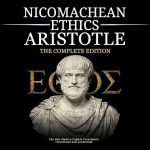
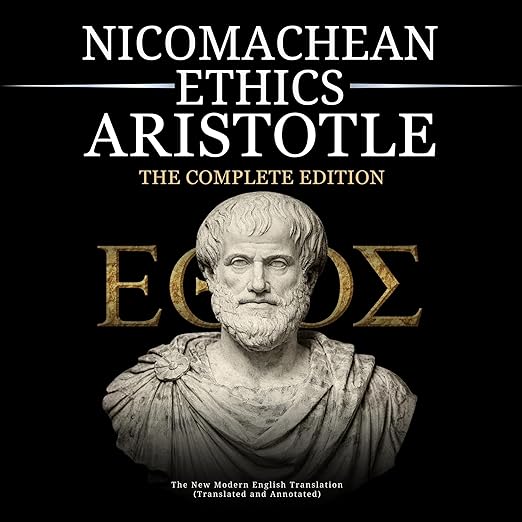
Aristotle’s Nicomachean Ethics is one of those texts I return to every few years with a slightly different set of questions and find new answers each time. It is also one of the most translation-dependent works in the canon: the difference between a faithful but archaic rendering and a genuinely accessible modern one can be the difference between genuine engagement and professional obligation. The Timeless Lore edition, narrated by Adam Nelson and published in March 2026, belongs firmly in the accessible camp. It offers a complete modern English rendering with contextual annotations and brief interpretive reflections, covering all ten books at 12 hours and 22 minutes.
I should say upfront that the 5.0 rating from 15 reviews is a small sample that likely reflects early readers who sought this edition specifically, and so cannot be taken as a representative consensus in the way a larger rating pool would be. But those reviews are unusually thoughtful, and they address the edition’s specific qualities rather than the text’s general reputation, which is a more useful signal than pure numerical rating. The pattern of engagement they describe suggests the edition is achieving what it sets out to do.
About the Audiobook
The Nicomachean Ethics is Aristotle’s systematic examination of what constitutes a good human life: what happiness (eudaimonia) actually is, how virtue is developed through habit rather than instruction, what the relationship is between individual flourishing and political community, and what role friendship plays in a life worth living. These are not abstract academic questions. They are the questions that anyone who thinks seriously about how to live will encounter, and Aristotle’s answers remain among the most rigorous and humane in the philosophical tradition. The text has shaped ethics, political thought, and our understanding of human behaviour for more than two thousand years, and it continues to generate serious engagement from philosophers, psychologists, and political theorists working today.
This edition distinguishes itself through three elements: a modern English translation that preserves fidelity to Aristotle’s argument while removing the barrier of outdated language; short contextual annotations explaining Greek terms and historical references at points where they would otherwise interrupt the argument; and brief reflections at the end of each of the ten books that highlight the structure and contemporary relevance of Aristotle’s thought. The combination makes the text genuinely accessible to first-time readers without patronising those who already know the material, which is a difficult balance to strike and one that the early reviews suggest this edition achieves.
The complete and clearly structured presentation, all ten books with clear divisions and titles, means the listener always knows where they are in Aristotle’s argument, which is a significant help in a text that builds its conclusions incrementally across a substantial length.
The Narration
Adam Nelson’s narration is unhurried and precise, exactly the qualities that philosophical text requires. Aristotle’s arguments build incrementally, with each section depending on what preceded it, and Nelson’s pacing reflects that structure rather than treating each chapter as an independent unit. The prose, even in modern translation, retains a density that rewards the measured delivery Nelson provides. The annotations and end-of-book reflections are handled with appropriate distinction from the main text, signalled clearly enough that listeners can orient themselves within the editorial apparatus without confusion. For 12 hours of sustained philosophical argument, this is a narration that earns genuine respect and does not test the listener’s patience unnecessarily.
What Readers Say
The early reviews, all from the United States, suggesting the edition has not yet fully penetrated the UK market, are remarkable for their specificity. One reviewer described finally finding an edition where “the ideas felt coherent from start to finish,” noting that the modern language removed “constant friction” without reducing the material. Another praised the annotations for adding context “at the right moments” rather than interrupting the argument’s flow. A third pointed to the edition’s suitability for both first-time and returning readers. A consistent thread across all five available reviews is that this translation achieves something genuinely difficult: it lowers the barrier of entry without lowering the standard of engagement. For a philosophical text of this seriousness, that is the highest possible compliment.
Who Should Listen?
Strongly recommended for anyone who has wanted to engage with Aristotle but found previous translations, the Ross, the Irwin, the Crisp, either too archaic in language or too arid in presentation for sustained audio listening. Also valuable for listeners who have studied philosophy and want to revisit the Ethics in a format that emphasises comprehension over scholarly apparatus. Philosophy students approaching the text for the first time should be aware that this edition is not a substitute for the scholarly apparatus required for academic work. The annotations are contextual rather than critical, and the reflections are introductory rather than evaluative. But it is an excellent way to absorb the argument before engaging with the secondary literature. Best listened to in the short sessions that the ten-book structure naturally suggests, ideally with time between sessions to reflect on what Aristotle has actually said.