Clara’s Verdict
Somewhere in the Ediacaran, Thomas Halliday stands you beneath the light of an enormous moon, in an age when life has not yet reached land, and asks you simply to look. That image alone would justify the price of admission. Otherlands is the debut of an award-winning palaeontologist who writes like a travel correspondent filing dispatches from impossible places, carrying us backwards in time from the most recent Ice Age to the dawn of complex life itself, across all seven continents. My honest take: this is the most transporting science writing I have covered in a long while, description with the confidence of fiction and the discipline of evidence. The caveat is structural. There are no continuing characters and no plot in the human sense, just a procession of vanished ecosystems, and listeners who need a narrative thread to hold may find eleven hours of it episodic. I found each world vivid enough that I rarely minded.
What This Edition Is and Who It’s For
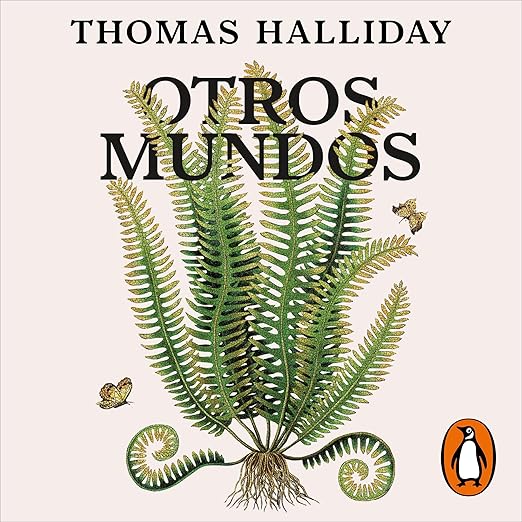
Otherlands comes from Penguin, released in audio on 1 February 2022 and running 11 hours and 6 minutes. It is neither a textbook nor a memoir of fossil hunting. It is a reconstruction: a series of guided visits to extinct ecosystems, from Pliocene Kenya, birthplace of humanity, to Jurassic islands in the Mediterranean where dinosaurs roam, all the way back to seas far older than anything that walked. Halliday renders each world with a novelist’s eye, the colour of a beetle’s shell, the rhythm of pterosaurs in flight, the lingering smell of sulphur in the air, yet every detail is grounded in fact, and that grounding is what separates the book from handsome speculation. What a listener gets is the sensory pleasure of fiction wrapped around the spine of serious science. If you have ever finished a wildlife documentary wishing someone would point the camera at the deep past, this is that wish granted.
Adetomiwa Edun, a Guide Across Deep Time
The narration falls to Adetomiwa Edun, and the brief is a demanding one: eleven hours of dense, sensory prose with no dialogue to hide behind and a steady procession of epochs, place names and species to land cleanly. Material like this rewards composure. It asks a narrator to be documentary presenter and storyteller in the same breath, slowing for the set pieces, that Ediacaran moonrise, the sulphur on the air, without letting the science soften into a lullaby, and keeping wonder and precision in balance from first chapter to last. The writing gives Edun plenty of both to work with. One practical note from me: this is an audiobook that repays attention, so save it for a long walk or a quiet evening rather than a noisy commute. The pleasure lives in the detail, and the detail deserves your ear.
What Readers Say
The aggregate offers my enthusiasm some useful cover. Otherlands holds a 4.5 average from 873 ratings, a genuinely large sample for a science title and a strong result for any debut. I do not have written listener comments for this edition, so I will not manufacture any, but a score of that height across that many listeners suggests the episodic structure I flagged has not troubled people in practice. For a book that asks its audience to care deeply about the Ediacaran, that is quietly remarkable.
Who Should Listen?
Listen if you love nature writing, if the phrase deep time quickens your pulse, or if you want serious science delivered with genuine literary style. It suits curious listeners without any background in palaeontology, because the travel-guide framing keeps the door open to newcomers. Skip it if you need plot, people and peril in the human sense: for most of these eleven hours there is not a human being in sight, and that is rather the point. I came away feeling that the ground under my feet was a stranger and grander place than it had been the day before. Few audiobooks manage that.