Clara’s Verdict
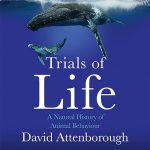
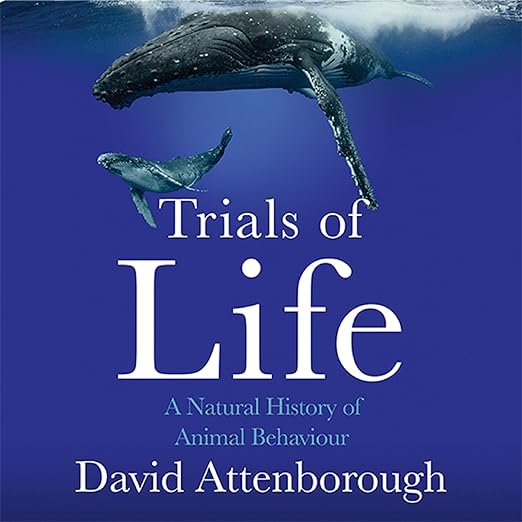
There is a particular kind of cultural authority that David Attenborough carries – earned over seven decades of broadcasting, writing, and sustained scientific advocacy – that makes encountering his work in any format feel like a privilege rather than simply a transaction. The Trials of Life, the third and concluding volume of his classic Life trilogy and the audiobook companion to the television series, runs to ten hours and holds a 4.7-star rating from 155 listeners. It is the book Attenborough himself described as “quite simply, the best thing I’ve ever done” – a statement worth sitting with from someone whose career has produced more genuinely fine things than most institutions. This updated edition covers ethology, the science of how animals behave and why, and it is a masterclass in the communication of complex ideas through sustained narrative precision. Natural history writing at its very best.
About the Audiobook
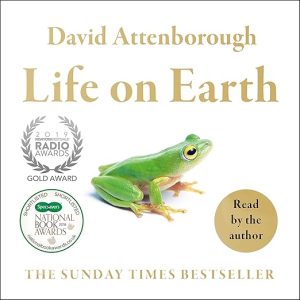
The trilogy structure matters for understanding what this book is doing. Life on Earth covered the evolution of the animal kingdom – how the vast diversity of life on this planet came to exist through the mechanisms of natural selection. The Living Planet examined ecology – how animals have adapted to the full range of environments the planet offers. The Trials of Life completes the survey by asking how and why animals behave as they do: ethology, which studies animal behaviour in natural conditions rather than under laboratory constraints, and which asks questions about communication, feeding, migration, reproduction, cooperation, and the relationship between individuals and their social groups that turn out to illuminate the behaviour of all animals – including, unavoidably, our own.
Attenborough’s gift is to translate a substantial body of scientific research into narratives that feel both rigorous and compulsive. He moves through the animal kingdom with the characteristic blend of specific detail and structural insight that has made his work endure across fifty years of natural history broadcasting: a particular behaviour in a particular species in a particular context, but always in service of a broader understanding of what it means to be a living organism navigating a world full of competitors, predators, and potential mates. The revised edition updates the text to incorporate developments in ethological research since the original publication, maintaining the intellectual currency of the science while preserving the narrative architecture that made the original a classic of popular science writing.
At ten hours, the runtime is well-proportioned: long enough to cover the subject with real depth and range, compact enough to maintain the sense of a sustained argument rather than an encyclopaedic survey. This is a book with a shape and a point, not merely a compilation of interesting animal facts. Attenborough’s care for structure – his sense of what needs to come before what, and why – is evident throughout.
The Narration
The narrator is not specified in the available listing, but Attenborough’s presence saturates the audiobook regardless of who is reading – one reviewer noted that it was “impossible not to read in David Attenborough’s voice,” which is its own testimony to the completeness with which he has colonised the natural history audio register over decades of work. The prose itself is written for the ear as much as the eye: the pacing is intrinsic to the text, and the audiobook format suits it very naturally indeed.
What Readers Say
With 155 ratings averaging 4.7 stars, this is one of the most confidently and consistently received natural history audiobooks available on the platform. Reviewers are brief but emphatic: “A broad overview with some incredible and funny detail. Impossible not to read in David Attenborough’s voice!” Another called it “an easy to read, informative and interesting book” and praised what appears to be the print edition’s photography. One listener noted simply: “This man is a legend. Great update to previously brilliant version.” The highest praise offered – and it comes from a listener who described it as the best book they had purchased in a long time – is the kind of unelaborated enthusiasm that tends to be more reliable than three paragraphs of carefully qualified assessment.
Who Should Listen?
Anyone with an interest in natural history, animal behaviour, or the tradition of careful scientific observation will find this an indispensable listen. It is also, and this is worth emphasising, simply very good writing – precise, vivid, and propelled by a lifetime of genuine curiosity about the natural world. Ideally, encounter the trilogy in order: Life on Earth, then The Living Planet, then The Trials of Life. But this volume stands entirely on its own terms as one of the finest works of popular natural history in the language, and no prior knowledge of the trilogy is required to get enormous value from it.
Listen to The Trials of Life by David Attenborough on Audible UK