Clara’s Verdict
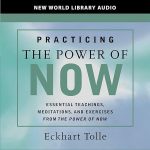
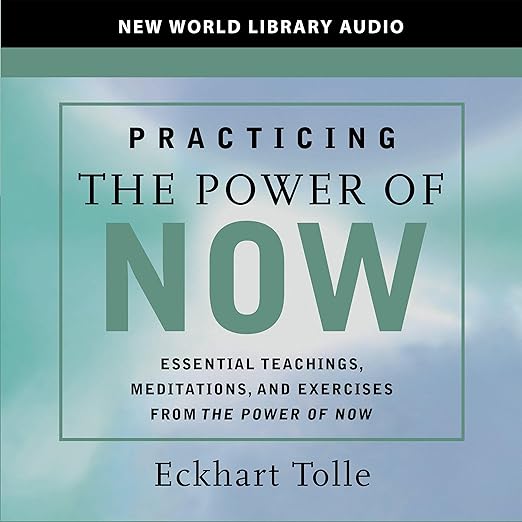
Eckhart Tolle reading his own work is, in my view, the only way to experience it. The voice – calm, unhurried, with its characteristic pauses – is inseparable from the teaching. Practicing the Power of Now is not a standalone work in the conventional sense: it is a carefully curated selection of exercises and key passages from the original The Power of Now, arranged as a practical companion for daily use. At under three hours, it is designed not to be consumed once and shelved but to be returned to, dipped into, used as a kind of reset. In that function, it is genuinely useful in a way that few audiobooks manage to be.
I approach spiritual self-help with a degree of professional scepticism – the genre produces a great deal of vague inspiration and relatively little of practical value. Tolle is an exception, and this compressed version of his core teaching is, in some ways, more useful than the fuller text for people who already know the ideas and need a regular prompt to actually implement them.
About the Audiobook
The premise is deceptively simple: suffering, Tolle argues, arises primarily from our compulsive thinking – our tendency to dwell in the past or project into the future rather than inhabiting the present moment. The remedy is not meditation in any formal sense but a shift in attention: learning to observe thought rather than identify with it, to experience the present moment directly rather than through the filter of mental commentary.
What Practicing the Power of Now offers is the practical scaffolding for this shift. Where the original book explains why presence matters, this companion asks: what do you actually do? The exercises are concrete – not vague invitations to “be present” but specific practices for working with difficult emotions, for recognising the pain body, for finding the stillness beneath mental noise. The accompanying PDF (available in your Audible library) supplements the audio with visual cues and structured reflection prompts.
At 2 hours and 56 minutes, it is brief enough to revisit regularly – and Tolle’s intent is clearly that you do exactly that.
The Narration
Tolle narrating his own work is not simply convenient – it is integral to the experience. His voice carries an unusual quality: very still, slightly accented, with pauses that feel deliberate rather than hesitant. Many readers find that simply listening to him induces a degree of the present-moment awareness he is describing, which is an odd thing to say but appears to be widely reported. He does not perform the text; he inhabits it. For a teaching about presence, this is exactly right.
What Readers Say
The audiobook holds a 4.6 rating, with reviews that span decades and circumstances. One listener described returning to it in their late forties, after initially reading it in their twenties: “The book hasn’t changed in the interim but I have – and I think this book is such a harbour.” Another uses it as daily reference material, dipping in each morning to “reconnect with my inner core of peace.” A reader managing a serious illness wrote that the book had helped them “disidentify with the pain body” in a way that other approaches had not. One reviewer notes that those who have already read the full book may find this repetitive – which is a fair point, though the intention is precisely that repetition.
Who Should Listen?
For those already familiar with Tolle’s work, this is a portable practice guide – something to return to during difficult periods or as a morning ritual. For those new to his ideas, the original The Power of Now provides more context, but this shorter version is a perfectly valid entry point. Particularly suited to anyone navigating anxiety, grief, or the chronic low-grade dissatisfaction that comes from living too much in one’s own head.
Listen to Practicing the Power of Now on Audible UK – and then listen to it again.