Clara’s Verdict
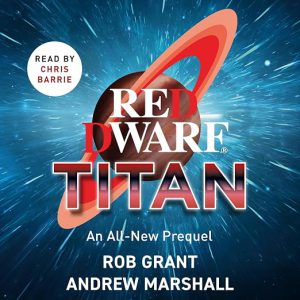
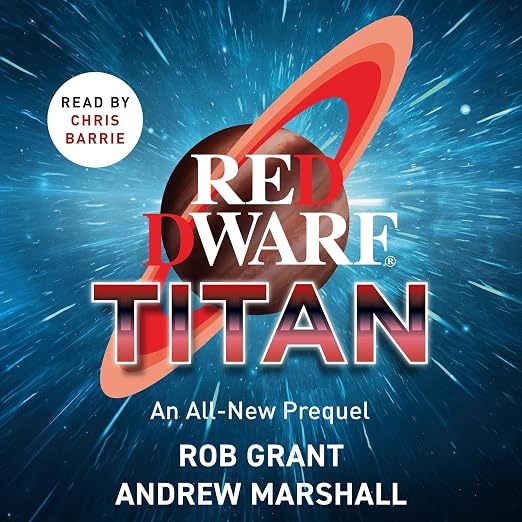
Before the beginning. That is how the publisher’s copy opens, and it is a properly cheeky way to describe a story set before the events everybody already knows. Red Dwarf: Titan is a prequel, and its entire comic engine is that we are watching two men get thoroughly on each other’s nerves while a mining ship sits parked in orbit around a moon of Saturn.
The premise is beautifully petty. The crew are heading down to Titan for shore leave: a hen party somebody is strangely reluctant about, a golfing break involving a certain amount of cheating, a cultural tour that sounds like a punishment, a marathon of drinking and fighting, an ambitious eating expedition, and an outing with the Shore Patrol described as invigoratingly violent. Meanwhile Dave Lister and Arnold Rimmer, who repair chicken soup machines for a living, have their own plans, and the only thing they agree on is wanting to be as far apart as possible.
Then a cryptic message arrives from the future, and eleven hours and two minutes of dimension hopping farce follows. It is high in the UK charts at the moment with an average of 4.3, and the reviews attached to it are some of the shortest and happiest I have read in a long while.
About the Audiobook
What Grant is doing structurally is more interesting than a prequel usually manages. The comedy in a setup like this depends on Lister and Rimmer being trapped together with nobody else to blame. A story set before that trap closes has to generate the same friction without the same premise, and Grant solves it by making their goals mutually obstructive. Rimmer is chasing illicit exam cheating technology to secure a promotion he wants far too much. Lister is trying to acquire a cat to smuggle aboard as part of a scheme to get back to Earth. Neither can succeed without the other noticing.
The message from the future then launches them into a race to save not only their own reality but every other one, which is an enormous plot for a comedy about two men who cannot stand each other. In the publisher’s own words they will be “united again, for the first time” with some new but somehow old friends, and that single line is the entire joke of a prequel expressed in a dozen words. The quest takes them through the seedier and more dangerous reaches of human civilisation, which is where this sort of comic science fiction has always done its best work.
Eleven hours is generous, and I would call that a feature rather than a fault. The pleasure here is accumulation: running gags, escalating indignities, a universe that keeps producing new ways to humiliate Rimmer specifically. A tighter edit would lose exactly the thing people come for.
The Narration
Chris Barrie narrates, and if that name already means something to you then you know precisely what this recording sounds like and have very likely bought it already. If it does not, here is what matters: he brings a performer’s relationship to this material rather than a reader’s, and the difference is audible from the first Rimmer line.
The specific technical demand of a comic novel like this is that the humour lives in delivery rather than in the sentences. Grant writes jokes that are funny on the page and considerably funnier when somebody lands the pause before the punchline. Barrie’s timing is the reason this works across eleven hours. A competent neutral reader would carry you through the plot and leave two thirds of the comedy on the studio floor.
The trickier requirement is tone. Grant is braiding several comic traditions together at once, and holding them in one line needs a narrator who can be arch, affectionate and mildly absurd inside the same paragraph. What Barrie declines to do is play it broad. Rimmer’s pomposity is delivered as sincere rather than as parody, which is the only way a character like that stays bearable at length, and Lister’s exasperation stays human rather than hardening into a catchphrase.
What Readers Say
The rating pool is modest, a little over thirty at the time of writing, but the 4.3 average is holding and the written responses are unanimous in a way that is genuinely unusual. Two of the three consist essentially of the word brilliant.
“A weird but touching mix of Red Dwarf, PG Wodehouse and a ZX Spectrum game. All of which I like.”
That is Freerick78, and the word doing the work there is touching. Comic science fiction is under no obligation to have feeling in it, and the fact that a reviewer reached for that adjective rather than simply calling the book funny suggests Grant has put something underneath the jokes. The review is headed “Thanks for everything, Rob.” which reads far less like a book review than like a note addressed to an author, and I will leave it at that.
The other two are brief and delighted. One reviewer says the book has sent them back to reread the later volumes, which is the most practical endorsement a prequel can possibly receive. Another simply writes “Brilliant” and stops. What I cannot give you from this feedback is any detailed assessment of the narration, because nobody has written about it at length, so my remarks above rest on the recording itself rather than on any listener consensus.
Who Should Listen?
Existing readers of Rob Grant need no persuading from me, and anybody with a long-standing affection for this universe should simply get on with it. More usefully, the prequel structure makes this a viable entry point. You do not need the earlier books to follow a story set before them, and starting at the beginning of a chronology is a perfectly legitimate way in even when it is not the order things were written.
Where I would apply the brakes is with listeners who have no history here at all and no particular taste for British comic science fiction. Eleven hours of escalating farce is a great deal of one very specific flavour, and the humour assumes a certain fondness for men behaving badly in confined spaces. If that sounds like an ordeal rather than a holiday, trust the instinct. If it sounds like a holiday, you are precisely the audience.