Clara’s Verdict
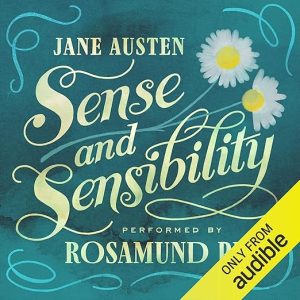
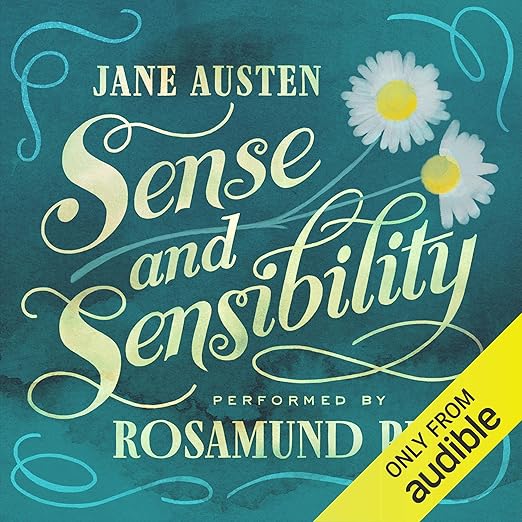
Rosamund Pike is one of the finest literary audiobook narrators working today – her reading of Gone Girl is a benchmark the medium is still measuring itself against – and here she turns her formidable attention to Austen’s first published novel with evident passion and genuine scholarly preparation. A graduate in English literature from Oxford who has spoken extensively about her love of Austen’s work, Pike brings an intimacy and intelligence to this recording that most readers of the novel will not have encountered in any other format. Sense and Sensibility is not Austen’s greatest achievement – most scholars reserve that distinction for Emma or Persuasion – but it is the foundation of the Austen project, and in Pike’s hands, even its structural limitations become interesting.
This is, simply, the definitive audio recording of the novel.
About the Audiobook
The story follows the Dashwood sisters – principally Elinor and Marianne – as they navigate the marriage market of late eighteenth-century England following their father’s death and their practical disinheritance by the entail laws that favour male heirs. The financial precariousness is not merely background; it is the structural condition that makes everything else possible and necessary. Without independent means, women had no security; without security, marriage was not romance but strategy, however prettily dressed.
Elinor embodies “sense”: controlled, perceptive, socially graceful, suppressing her own considerable emotional life – her genuine love for Edward Ferrars, her anxiety about her family’s situation – in order to maintain the household’s equanimity and protect those she loves. Marianne embodies “sensibility”: passionate, romantically reckless, impatient with social convention and its hypocrisies, and dangerously willing to invest completely in a person before that person has been properly tested. Both will have their hearts broken. Both will learn something about the costs and limits of their respective principles.
Austen’s first published novel bears traces of its origins as an epistolary work, and some of the characterisation is less fully rounded than in her later books – Colonel Brandon as romantic hero remains slightly unconvincing, Willoughby’s explanatory collapse somewhat mechanical. But the central dynamic between the two sisters, and particularly Elinor’s quietly heroic emotional endurance, is as good as anything Austen wrote. The irony cuts cleanly, the social satire is simultaneously funny and furious, and the novel arrives at its ending with the satisfying logic of a well-constructed proof.
What this recording particularly illuminates is Austen’s dialogue, which can look formal on the page but which, spoken by a skilled actor, becomes electric. The scene in which Edward Ferrars and Elinor navigate a conversation freighted with everything neither is permitted to say is genuinely tense in Pike’s rendering – more tense than any thriller passage I’ve listened to recently. Austen knew exactly what she was doing with constraint and indirection, and Pike understands it too. A note for those approaching Austen for the first time: don’t be discouraged by the relative stiffness of the opening chapters. By the midpoint you’ll have found the wavelength, and the book will open up entirely. The reward for patience is considerable: a writer of extraordinary intelligence at work on questions – about money, love, duty, and self-knowledge – that have lost nothing of their relevance in two hundred years.
The Narration
Pike’s admiration for Austen is evident throughout – she played Jane Bennet in the 2005 Pride and Prejudice film and brings genuine literary intelligence to the reading. Her differentiation between Elinor and Marianne is achieved through very subtle vocal choices – a slight loosening of control for Marianne, a slight increase in precision for Elinor – rather than obvious characterisation. The secondary characters are consistently drawn with enough distinctiveness to be immediately identifiable without tipping into caricature. This is an Austen recording that rewards full attention.
What Readers Say
Rated 4.4 out of 5 from 13 Audible reviews. “Is it any wonder I now blame myself heartily for having waited so long?” wrote one convert approaching Austen systematically in his late forties. Others praise Pike’s narration specifically and call the edition “beautiful.” A more measured review found the novel itself less satisfying than Mansfield Park – a legitimate literary judgement, though not a reason to miss this extraordinary recording. The character writing at its best is already unmistakably Austen’s.
Who Should Listen?
Anyone who hasn’t yet read Austen and wants to understand what the fuss is about: this is an excellent entry point that makes the pleasures of her irony and social observation immediately accessible. Anyone who has read Austen in print and wants to encounter her through a narrator who has genuinely thought about what she was doing. And anyone who wants to spend eleven hours in the company of two sisters navigating a world that rewards their intelligence whilst demanding their compliance. Begin your Austen audio collection on Audible UK. Also available on Kobo and Scribd.

![Pride and Prejudice [Audible Studios]](https://myaudiobook.co.uk/wp-content/uploads/2026/04/pride-and-prejudice-audible-studios-300x300.jpg)