Clara’s Verdict
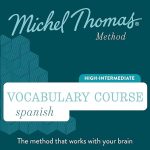
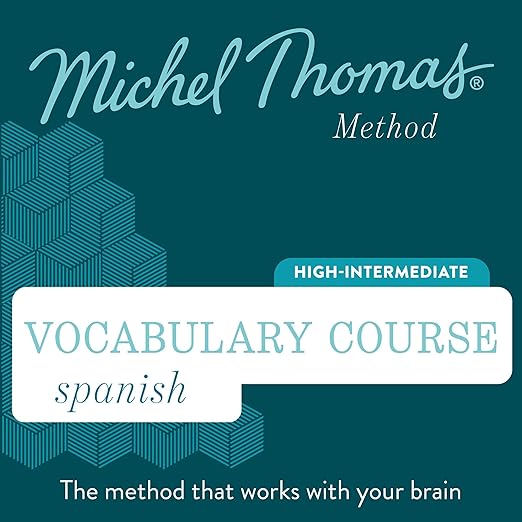
Michel Thomas was, by most accounts, a remarkable educator – a polyglot who survived the Holocaust and went on to develop a language-teaching method so distinctive it made him famous in his own lifetime and continues to generate new courses many decades after his death. The Spanish Vocabulary Course is part of the Michel Thomas Method ecosystem, and while it is the fourth step in the recommended sequence rather than an entry point, it stands as a useful demonstration of what the method does well and where its limits lie.
The approach is genuinely unusual and worth understanding before you purchase. No memorisation, no writing, no traditional vocabulary lists. Instead, new words are introduced in a pattern-based framework that exploits the structural similarities between Spanish and English, building in such a way that – the method’s famous claim – words cannot be forgotten because they were never memorised in the conventional sense; they were understood and constructed. For listeners who have found traditional language learning arid and ineffective, this is worth serious consideration. For listeners who need the visual reinforcement of written text, the method will feel incomplete without the PDF that accompanies the Audible purchase.
About the Audiobook
This is the fourth course in the recommended Michel Thomas Method sequence for Spanish: Foundation, Language Builder, Intermediate, and then the Vocabulary Course, followed by the Insider’s course. It is taught by Rose Lee Hayden, one of the certified Michel Thomas Method teachers, working with two genuine students rather than actors – real learners working through the material in real time, making real errors, experiencing real confusion and real breakthrough. That format is central to the method’s approach: listeners participate alongside the students, pausing after each question to formulate their own response before hearing how the students answer and how the teacher corrects and explains.
Over 1,000 carefully selected “power words” are introduced across the six hours, including verbs and everyday phrases prioritised for their practical utility and their connection to vocabulary English speakers already carry. The selection principle – choosing words that unlock maximum communication and that connect to existing English knowledge – is one of the method’s enduring and well-documented strengths. The vocabulary builds systematically, each new item introduced in a context that reinforces what has already been encountered. Hayden’s approach to teaching follows Thomas’s foundational principle: if the student has not learned, the teacher has not taught.
With pausing and active response, the course takes twenty to twenty-five hours to complete properly, despite the six-hour audio length. This is not passive listening but active language acquisition, and the distinction matters enormously for how you approach and schedule it.
The Narration
Rose Lee Hayden leads the sessions in the style established by Michel Thomas: patient, precise, encouraging without being falsely cheerful, and committed throughout to the principle that the learner’s failure is always the teacher’s failure. Her delivery is warm without the hollow positivity of some language software, and her explanations of why words work the way they do – the patterns that connect Spanish to English – are clear and memorable. The classroom audio includes the students’ real responses: their hesitations, their errors, their moments of genuine insight. This unpolished quality is not a production flaw; it is the method. It creates authenticity that studio-polished language courses consistently lack, and it is the mechanism by which listeners integrate the material as they hear it.
What Readers Say
This specific release does not yet carry aggregated ratings on Audible, though the Michel Thomas Method as a whole has a substantial and passionate following built across many years and many languages. The Method has been commercially successful in multiple European languages, with learners consistently reporting more rapid conversational progress than they achieved through classroom or app-based alternatives. Listeners who respond well to auditory learning, who struggle with written memorisation, and who want to develop spoken Spanish specifically – rather than reading or writing competence – are consistently the most satisfied users. The most common caveat is that without the prerequisite courses in the sequence, this vocabulary material can feel under-scaffolded, which is why the publisher recommends it at Step 4 rather than as a starting point.
Who Should Listen?
Anyone who has completed the earlier Michel Thomas Spanish courses and wants to extend their vocabulary significantly will find this the natural and well-designed next step. It is also of value for those with existing Spanish – perhaps from school, from living in a Spanish-speaking country, or from prior self-study – who find vocabulary rather than grammar is now the limiting factor in their fluency. Not a complete Spanish learning solution on its own; it works as part of the method’s sequence. If you are entirely new to Spanish, start with the Foundation course and work through in the recommended order; the architecture of the method rewards that patience. The accompanying PDF is worth downloading and using alongside the audio.
The Spanish Vocabulary Course (Michel Thomas Method) – Full Course is available on Audible UK via the link below, with a PDF included in your Audible library. Also available on Kobo, Scribd, and Storytel.