Clara’s Verdict
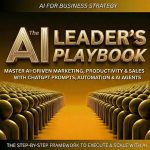
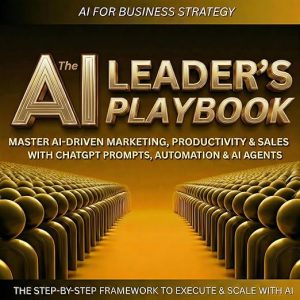
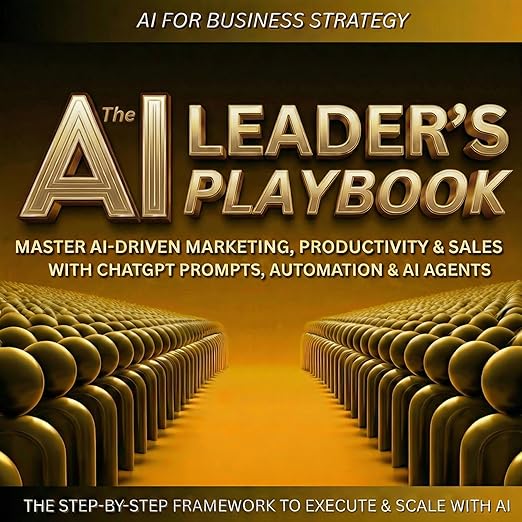
The AI business book market arrived in approximately 2023 and has since produced enough titles to fill several shelves, most of them combining maximum hype with minimum substance. Austin Chen’s AI Leader’s Playbook – part of the AI for Business, Strategy and Leadership series – distinguishes itself by the same quality that makes any good business audiobook worth recommending: it is organised around execution rather than possibility, around what you do next rather than what the technology might eventually enable. Narrated by Ted Kettler across 3 hours and 27 minutes and published by Blackstone Publications in January 2026, this is a deliberately compact, action-focused guide for professionals who have spent enough time hearing about AI’s potential and need a systematic approach to realising it in their actual organisations.
About the audiobook
Chen’s diagnosis of why most professional AI adoption fails is sharp and immediately recognisable to anyone who has watched a team enthusiastically subscribe to AI tools that are still largely gathering dust six months later. The problem, he argues, is not the technology: it is that most professionals approach it backwards. They acquire tools before identifying use cases. They experiment without a structural framework. They chase every new platform release while mastering none. The result is inconsistent outputs, abandoned subscriptions, and the persistent, demoralising sense that everyone else has figured out something fundamental that they have somehow missed.
The remedy Chen offers is a systematic approach built around several distinct frameworks. The Three-Zone Framework separates work that artificial intelligence should handle completely from work that requires human judgement – addressing the foundational question of what to automate and what to protect. The CRAFT method provides a structured approach to writing prompts that produce expert-quality outputs on a first attempt rather than requiring five iterations and a growing sense of frustration. The STAR workflow system is designed for automations that, once built correctly, run without continued manual oversight.
Beyond the frameworks, the book includes 15 copy-paste business prompts across strategy, marketing, sales, operations, and HR – described as “battle-tested templates ready for immediate deployment” rather than starting-point examples requiring significant adaptation. The AI Readiness Audit is a 60-minute process for identifying highest-impact opportunities within a specific organisation, and the Three-Tier ROI Model provides a structure for measuring what AI implementation is actually achieving. The accompanying PDF, available in the Audible library with purchase, extends the actionable toolkit beyond what can be practically conveyed in audio. Published by Blackstone Publications, it arrived in January 2026 at precisely the moment when the first wave of AI tool enthusiasm was giving way to questions about what, specifically, to do with it all.
The narration
Ted Kettler delivers the material with a business-appropriate clarity that keeps the technical content accessible without over-simplifying it. The 3 hours and 27 minutes are paced to reflect the book’s philosophy: dense enough to be useful, brief enough to complete. Kettler’s delivery supports the chapter-by-chapter structure – each unit building on the previous one – without imposing an artificial urgency on material that is, by design, meant to be methodically applied rather than quickly consumed. The audio format works well for business frameworks, which benefit from being heard as well as read.
What readers say
Released in January 2026, the book has not yet accumulated substantial listener reviews on Audible. The specificity of the frameworks – named, structured, and designed for direct application – suggests it will find its audience among middle managers and business owners who have already invested meaningfully in AI tools and are now under pressure to demonstrate a return on that investment. The 30-day execution frame, which asks listeners to complete the action steps in each chapter before moving on, is a particularly strong hook for the audiobook format, which rewards a pace of consumption that matches the pace of application.
Who should listen?
There is a broader point worth making about books like this one: the 30-day execution frame is not merely a marketing device. It reflects a genuine understanding of how professional behaviour change actually works – not through inspiration but through structured repetition at manageable intervals. Chen’s decision to organise the book as a daily practice rather than a reference text is a design choice, and it is the right one for the subject matter. AI adoption fails not because people lack knowledge but because they lack a structure that makes new habits stick.
This is for working professionals responsible for team productivity or business strategy who cannot afford six months of unstructured experimentation before arriving at an AI system that delivers consistent results. Marketing managers, operations directors, independent consultants, and small business owners who need a structured framework rather than inspiration will find the most value here. It is not designed for technical specialists or developers already deep in AI implementation – its frames are business-first, not technical. Listeners who found generic “ChatGPT for Business” titles too shallow and academic AI textbooks too abstract will find Chen’s pragmatic middle ground genuinely useful.
Listen to The AI Leader’s Playbook on Audible UK and build your working AI system in 30 days rather than 30 months.