Clara’s Verdict
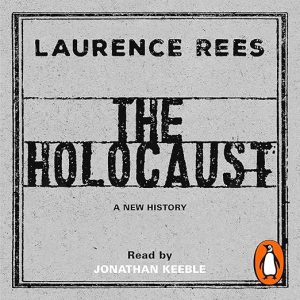
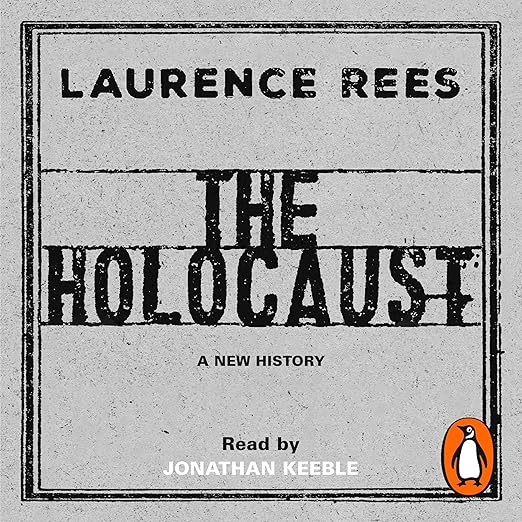
There is no shortage of books about the Holocaust, and the question any new work must answer is: what does this add? In the case of Laurence Rees’s landmark history, published in 2017 and now available in a meticulous audiobook edition, the answer is substantial. Rees has spent twenty-five years interviewing survivors and perpetrators – gathering testimony that in many cases had never before been published – and the result is a history that combines primary witness accounts with the most current academic research to produce something that is both authoritative and profoundly human. The central questions Rees pursues – how and why did the Holocaust happen? – sound straightforward. The answers are anything but.
I review a great deal of historical non-fiction and I return to Rees’s work more than almost any other historian writing in this space. His gift is for making the bureaucratic and ideological machinery of genocide comprehensible without ever losing sight of the individual human beings it consumed.
About the Audiobook
Rees’s approach is both chronological and thematic. He traces the escalating series of decisions and policies that cumulatively created the Holocaust – not as an inevitable plan executed from the outset, but as a process of radicalisation that accelerated in response to circumstances, ideology, and the particular psychology of the Nazi state. He is careful to examine the participation of perpetrators across Europe, not just within Germany, and he situates the murder of the Jews within the broader Nazi project of racial annihilation that also targeted homosexuals, Roma, and the disabled.
The testimony is remarkable. Rees has gathered eyewitness accounts that add material we genuinely did not previously have in accessible form – survivors speaking about experiences they had never before shared publicly, former perpetrators (interviewed before their deaths) articulating justifications and denials that illuminate the moral psychology of mass crime. It is not a comfortable listen. It was never going to be. But it is the kind of history that people have an obligation to understand, and Rees makes that obligation feel less like duty and more like genuine intellectual engagement. Running time: nineteen hours and thirty-four minutes.
The Narration
Jonathan Keeble reads, and his narration is serious and without self-indulgence – exactly what this material demands. Keeble is one of the UK’s most experienced audiobook narrators, and his command of pace and register is impeccable here. The testimony passages, which require a different quality of attention from the analytical sections, are handled with the appropriate gravity. At nearly twenty hours, this is a long listening commitment, and Keeble sustains both his own consistency and the listener’s engagement throughout. This is not a narration that draws attention to itself; it serves the history.
What Readers Say
The audiobook carries a 4.7 rating from a handful of reviews, all of which express deep respect for the work. One reviewer called it “a very readable history of the Holocaust” and added, with characteristic British understatement, “tough to read of course given the subject matter.” Another provided a more expansive assessment: “such a well written and authoritative treatment of the subject,” noting its exploration of “the fragility of the human mind and its susceptibility to behaving in unthinkable ways.” A third praised Rees for “studying in fine detail the small and larger events that eventually lead to the worst atrocities” and compared it favourably to his earlier works, Their Darkest Hour and Auschwitz. One listener, who described having read it “several times,” noted: “each time I learn something new, each time it’s just as shocking.”
Who Should Listen?
Essential for anyone seeking the most thorough, accessible, and research-current single-volume account of the Holocaust available in audio format. Recommended for readers of narrative history, students of the Second World War period, educators, and anyone who wants to understand how a modern state can pursue the systematic murder of millions of people. This is demanding material – approached with the seriousness it deserves, it is also one of the most important listening experiences available in the genre.
Listen to The Holocaust on Audible UK – find it here.