Clara’s Verdict
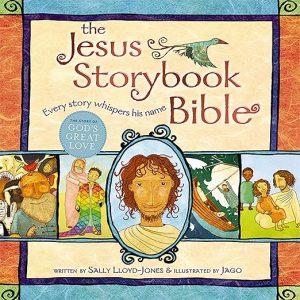
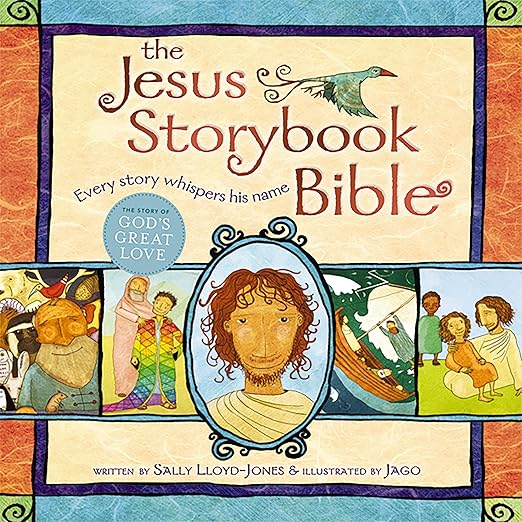
There is something to be said for a children’s Bible that does not condescend. Most children’s Bibles flatten the Old Testament into a parade of morality tales with illustrations designed not to frighten, and the result is a text that is safe and forgettable in roughly equal measure. Sally Lloyd-Jones took a different approach in The Jesus Storybook Bible: she wrote it as a unified narrative with a single interpretive thread running from Genesis to Revelation, the thread being that every story in Scripture is ultimately pointing toward one person and one act of rescue. That theological coherence gives the book a structural integrity that most children’s Bibles lack entirely, and it explains why, well over a decade since its original publication with more than three million copies sold, this title continues to attract reviews of unusual warmth from parents, grandparents, and readers who discover it as adults.
The audiobook is narrated by David Suchet. That casting decision alone is worth pausing on, because Suchet is not merely a competent choice. He is the right choice, and the difference between those two things is audible throughout.
About the Audiobook
Published by Zonderkidz in October 2009 and running to three hours and twenty-three minutes, this recording covers forty-four stories from across the Old and New Testaments, illustrated in the print edition by the artist Jago. The text is formally aimed at children up to approximately sixth grade, but the responses from grandparents, adult readers, and parents who describe profound theological engagement alongside their young children suggest the book consistently transcends its official age range. Lloyd-Jones writes about the big sweep of the biblical narrative, including creation, fall, exile, covenant, and redemption, with a clarity that does not simplify so much as distil. She is working in a tradition of narrative theology aimed at children that goes back to John Bunyan and beyond, and she handles it with genuine literary skill. The prose has a rhythm and a warmth that sits naturally in audio form; it sounds as though it was written to be spoken aloud as much as read on the page. The three-hour runtime is also well suited to breaking the book across many shorter sessions with children, each story functioning as a self-contained episode within the larger narrative.
The Narration
David Suchet has one of the most immediately recognisable voices in British cultural life, having spent fifteen years as Hercule Poirot and having narrated a complete audio Bible in his own right. For a children’s text that requires both authority and tenderness, warmth and gravitas in the same breath, his voice is an exceptionally good match. One reviewer, a grandfather, describes Suchet’s intonation and the meaning he gives to the text as warming one’s heart, which is not hyperbole. Suchet reads with a quality of care that suggests genuine engagement with the material rather than a professional performance at arm’s length from it. He does not condescend to the young audience and he does not over-perform for them; he simply reads the text with intelligence and love. Several reviewers note that his reading of specific passages created a deeper understanding of those stories than they had encountered through print alone, which is the highest possible compliment for an audiobook narrator.
What Readers Say
With only one Audible UK rating, the review pool for this specific edition is extremely small. But the book has three million copies sold in print and an extensive body of reader responses across platforms accumulated over fifteen years, all of which are consistent in their warmth. The audio edition’s specific virtues, particularly Suchet’s voice and the Zonderkidz production quality, are mentioned favourably in most responses that address the recorded format. No substantive criticism of the content appears in the available reviews, which is notable for a religious title: this book appears to generate genuine cross-denominational and even cross-faith appreciation for the quality of Lloyd-Jones’ writing and Suchet’s narration.
The production value of the Zonderkidz audio edition is worth noting specifically. The recording is clean, the levels are consistent, and there is no extraneous music or sound design of the kind that sometimes distracts from audiobooks aimed at children. Suchet reads against a quiet backdrop, which allows the text and his voice to do all the work. For parents who are particularly sensitive to intrusive production elements in children’s audio content, this is a reassuring point: the recording is straightforward and the narration is the whole experience.
Who Should Listen?
This audiobook is ideal for Christian families introducing the Bible to young children, for grandparents looking for a gift that works from infancy through early adolescence, and for anyone including adults who want to encounter the Bible as a unified narrative with a clear interpretive through-line rather than a collection of disconnected stories. The Suchet narration makes it a serious audio experience in its own right rather than merely a children’s production. Those looking for a complete Bible text, a study Bible with commentary, or a modern translation in audio form should look elsewhere: this is a curated narrative retelling of forty-four selected stories, not a complete scriptural recording.