Clara’s Verdict
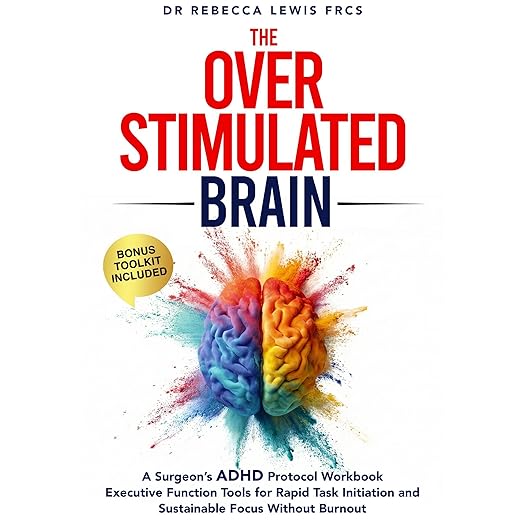
The ADHD self-help audiobook market has expanded enormously in the last five years, and a good deal of it is repetitive – the same advice about body doubling and timer apps, dressed up with different metaphors. The Overstimulated Brain by Dr. Rebecca Lewis does something more interesting: it applies the precision of surgical thinking to the specific problem of executive function in neurodivergent adults, with a particular focus on the gap between knowing what to do and actually initiating the task.
This is the first book in the Overstimulated Series, and at just under three hours it’s compact enough to be genuinely useful to its target audience – people who struggle to finish long books on productivity. The workbook format means it asks for engagement rather than passive absorption, which is arguably the correct approach for material about overcoming mental paralysis.
I’ll be honest: the marketing copy is more breathless than the content deserves, and some readers may bristle at the sales-page register of phrases like “clinical-grade protocol.” But the underlying ideas are sound, the structure is clear, and the feedback from neurodivergent readers has been striking in its specificity and its warmth.
About the Audiobook
Dr. Lewis opens with a distinction that I found genuinely clarifying: the problem for high-achieving adults with ADHD is rarely ability or intelligence. It’s a biological bottleneck in task initiation – a gap in the neural circuitry that converts intention into action. Standard productivity approaches fail not because the user is lazy but because those approaches assume a nervous system that responds to deadlines, willpower, and priority lists. ADHD nervous systems largely do not.
The Rapid Task Initiation Framework is the book’s centrepiece – a structured approach to breaking the “wall of awful,” which is the name researchers have given to the visceral resistance many people with ADHD experience when approaching a task they know they should be doing. Lewis explains the neurological basis for this resistance (dopamine dysregulation, working memory limitations) and then provides specific techniques for circumventing it, drawing on methods used in high-stress clinical environments.
The book also covers dopamine management, sensory regulation, burnout prevention, and what Lewis calls the “Overstimulation Reset” – a five-minute intervention designed to clear the mental fog that accumulates over the course of an overstimulated day. The workbook elements include reflection prompts, checklists, and implementation frameworks that translate naturally to the audio format.
The Narration
Lisa Miller narrates this edition with a calm, precise delivery that suits the material. She doesn’t oversell the enthusiasm – a common mistake in this genre – and the pacing is measured enough to allow the more technical passages to land without feeling rushed. At under three hours, the audiobook is short enough that listeners can return to specific sections easily, which is helpful for material designed to be used as reference rather than read once.
What Readers Say
The reviews are international – reflecting the audiobook’s distribution – but consistently specific. A listener from Spain who identifies as having ADHD wrote: “The author explains various points you need to have in mind when you are willing to put your brain in work mode with 0 distractions, like cleaning your workspace of phones or objects that can distract you and also finding some established break times.” An Italian reviewer praised the book’s methodical approach: “It doesn’t rely on motivation or willpower but breaks focus and overload into concrete systems you can actually test.” A US listener noted: “I like that it’s a workbook and not just something you read once and forget. The tools focus on actually starting tasks, which is where I struggle most.” The rating stands at 4.8 from five reviewers.
Who Should Listen?
This is primarily for adults with ADHD – diagnosed or self-identified – who are in professional or academic settings and need practical tools for executive function rather than general inspiration. It’s particularly useful for people who already have some familiarity with the neuroscience of ADHD and want something more applied than explanatory.
Those new to the subject might benefit from starting with something like Edward Hallowell’s ADHD 2.0 first; readers with more experience of the territory will find Lewis’s workbook approach a valuable complement to the conceptual literature. Available on Audible UK, Kobo, Scribd, and Storytel. Listen to The Overstimulated Brain on Audible UK – compact, practical, and honest about what it is and isn’t.