Clara’s Verdict
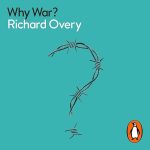
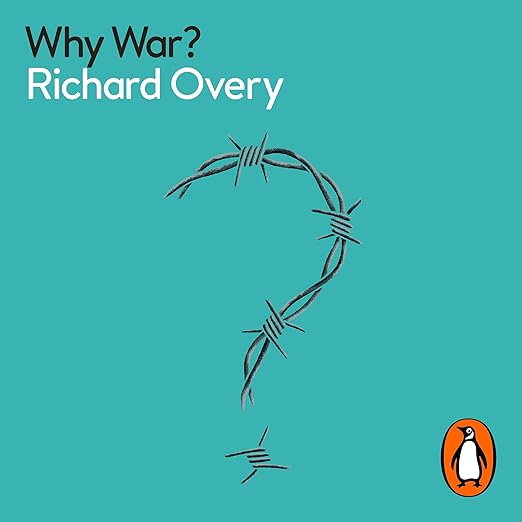
Richard Overy is one of Britain’s most distinguished historians of conflict, and War – published in the Pelican Books series, which has a long tradition of making serious scholarship accessible – is his attempt to answer the most fundamental question about human history: why have we always done this to each other? This is not a history of specific wars. It is something more difficult and more valuable: an investigation into the roots of organised violence, drawing on biology, psychology, anthropology, political theory, and moral philosophy. Dennis Kleinman reads with appropriate gravity. At ten hours, it’s demanding listening. It’s also essential.
About the Audiobook
Overy’s central argument – or rather, his central refusal to argue – is that war is too diverse and historically widespread to yield to any single explanation. The book surveys the field honestly: the evolutionary biologists who see violence in our primate heritage, the psychologists who locate it in the construction of group identity and in-group/out-group dynamics, the historians who point to specific material and political conditions, the philosophers and theologians who have struggled for centuries to define just and unjust uses of force.
What emerges is not nihilism but something more uncomfortable: a recognition that the impulses that generate war are often the same impulses that generate community, loyalty, and sacrifice. Overy doesn’t let this observation become an apologia – the book’s treatment of the twentieth century’s industrialised slaughter is unsparing. But he resists the comforting fiction that war is simply aberration, a failure of otherwise peaceful human nature. His conclusion, that warfare is likely to remain part of our future as well as our past, has drawn some pushback; it also has the uncomfortable quality of being probably correct.
The Narration
Dennis Kleinman’s reading is measured and precise – the right register for a book that is making careful arguments rather than telling exciting stories. He handles the transitions between different academic disciplines smoothly, and his delivery of Overy’s drier observations carries a faint wryness that suits the material. At 10 hours and 2 minutes, this is best approached as a course of study rather than a passive listen.
What Readers Say
A 4.2-star rating from 147 listeners – solid and honest. Robert Morgan calls it “the perfect introduction to the concept of war, its causes, its justifications, its philosophy and its laws.” Gin Drinker’s review is perhaps the most perceptive: “If you pick up this book expecting to arrive at that hopeful conclusion, you are destined for disappointment” – but offers this as a mark of Overy’s intellectual honesty rather than a failure. The main dissent, from Trevor Prew, challenges Overy’s conclusion on the permanence of war, arguing it reflects a historian’s bias. It’s a reasonable challenge, and engaging with it is part of what makes this book worthwhile.
Who Should Listen?
Readers interested in military history who want to understand not just what happened but why, students of political science, history, and philosophy, and anyone grappling with the persistence of conflict in a world that has every reason to have left it behind. Challenging but rewarding; best approached with a notebook. Part of the Pelican series, which makes it a natural companion to other titles in that tradition.
Available on Audible UK: Listen to War by Richard Overy on Audible UK.