Clara’s Verdict
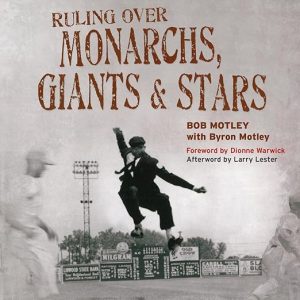
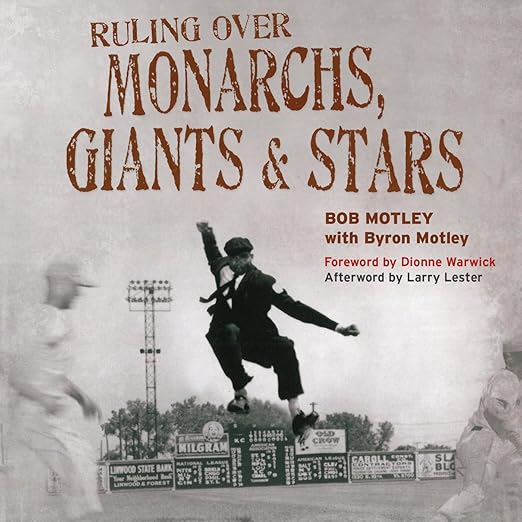
I am not, by any honest reckoning, a baseball person. But I have never let that stop me picking up a good memoir, and Ruling Over Monarchs, Giants and Stars is a very good memoir. Bob Motley, the last living umpire from the Negro Leagues at the time of publication, and his son Byron have produced something that is simultaneously a piece of sporting history, a social document of considerable weight, and a personal account of extraordinary persistence in the face of institutionalised racial exclusion. The Negro Leagues operated for more than fifty years and produced players whose names are now canonical: Satchel Paige, Hank Aaron, Ernie Banks, Willie Mays all appear in these pages. Seeing that world through the eyes of an umpire rather than a player gives the book an angle that is genuinely fresh and consistently illuminating, and it is that angle, the man behind the plate calling it as he sees it, that makes this worth your time even if baseball itself holds no particular appeal.
About the Audiobook
The book was produced by Audible Studios and released in February 2013, which places it in the early period of Audible’s investment in original audio production. It runs to eight hours and twenty-five minutes, long enough to give both the historical sweep and the personal memoir their due without either feeling rushed or unnecessarily padded. Bob Motley began umpiring for the Negro Leagues in the mid-1940s, working alongside some of the most gifted players in American baseball history for over a decade, before the leagues declined following the broader desegregation of the sport. His account is simultaneously a record of the leagues’ rich and distinctive culture, and the team names alone carry a particular weight: the Kansas City Monarchs, the Chicago American Giants, the St. Louis Stars, the Birmingham Black Barons, the Homestead Grays, the Indianapolis Clowns, and a personal story of what it meant to be one of the very few Black umpires in American professional sport during a period of profound social restriction.
Father and son wrote it together, which gives the book a layered quality that a single-author memoir would not have. Bob’s firsthand recollections, vivid with the specific characters, anecdotes, and logistical realities of travelling through the segregated South to call games, sit alongside Byron’s contextualising perspective on the historical significance of what his father experienced. The combination produces something with the texture of testimony and the shape of history simultaneously.
The Narration
Richard Allen narrates, bringing a measured authority to a memoir that could easily have tipped into either hagiography or bitterness and does neither. His delivery of the anecdote-heavy sections, including Motley’s famously flamboyant umpiring style, the specific characters he encountered across different teams and cities, and the practical logistics of a life spent travelling the Black baseball circuit, is appropriately conversational without being loose. The humour in the book, which one reviewer describes as a triple-play of anecdotes, humour, and history, is delivered with good timing. Allen does not impose emotional weight where the material supplies it naturally; he reads with the restraint that good memoir narration requires and that the dignity of the subject demands.
What Readers Say
With 28 ratings and a 4.5-star average, the response is consistently positive if not particularly voluminous. The reviews are predominantly from US-based listeners, which reflects the subject matter since the Negro Leagues are a specifically American chapter of sporting and social history and the community most engaged with their memory is understandably concentrated there. Reviewers emphasise both the book’s accessibility and its historical substance. One reviewer used it as research material for a college presentation on Motley’s role in the Negro Leagues and was impressed by how readable and how difficult to put down it was despite being research material. The emotional note that appears most frequently across responses is sadness at what Black Americans were subjected to for so long, combined with genuine celebration of what the Negro Leagues achieved within those constraints: a vibrant, skilled, beloved institution that earned its place in American sporting history.
One more thing worth noting for potential UK listeners: the reviewed editions are primarily from the US, which is unsurprising given the subject matter. But this should not deter British readers. The Negro Leagues represent one of the most remarkable chapters in sporting history anywhere in the world, and the story of Black Americans creating their own vibrant, skilled, beloved institution in the face of systematic exclusion from white-organised baseball is a story with universal resonances. The comparison to British sporting history of the same era, and the forms of exclusion and resilience that characterised it, is one that attentive listeners will draw naturally.
Who Should Listen?
This is a book for anyone interested in American sporting history, civil rights history, or memoir as a genre. Baseball expertise is not a prerequisite: the book explains its context clearly, and the deeper themes of racial exclusion, resilience, and community are universal. The Negro Leagues represent a significant and often underrepresented chapter of both sports history and American social history, and hearing from the only living umpire of that era carries a documentary weight that extends well beyond any interest in the sport itself. Listeners who enjoy sports biographies told from unusual vantage points will find Motley’s perspective consistently illuminating. The book is suitable for older teenagers and adults.