Clara’s Verdict
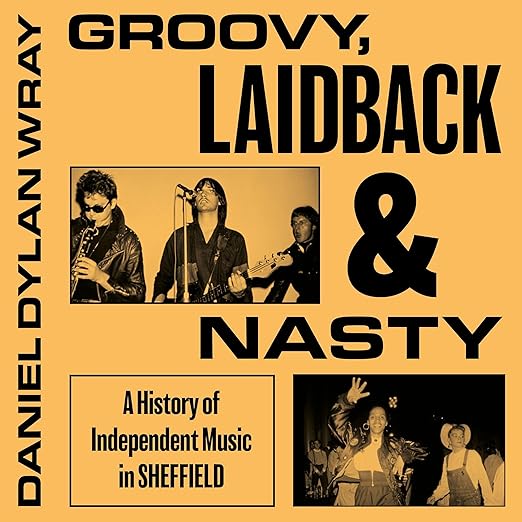
Every great city has its musical mythologies, and Sheffield’s has been strangely underserved – strangely, because the city produced the Human League, Pulp, Cabaret Voltaire, Def Leppard, Arctic Monkeys, Heaven 17, Warp Records, Richard Hawley, and Self Esteem, among many others. The absence of a definitive account of Sheffield’s musical history has been a genuine gap in the literature of British music, and Daniel Dylan Wray has now filled it with the thoroughness and seriousness the city’s contribution deserves. Over 150 original interviews across seven decades of music history is a serious piece of work. The result is a book that will matter to anyone who cares about British music, post-industrial culture, and the specific conditions that produce extraordinary creative output.
About the Audiobook
The title borrows from a phrase used by the Heaven 17 and British Electric Foundation axis – perfectly apt for a book about a city that made electronic futurism and working-class wit sound like they naturally belonged together. Wray’s approach is broadly chronological but structured around recurring themes: the fiercely independent ethos that runs through Sheffield music from the punk era onwards, the economic circumstances – deindustrialisation, mass unemployment, Thatcherism’s assault on the industrial North – that shaped the city’s creative culture in deeply specific ways, and the manner in which Sheffield’s relative isolation from the London mainstream forced its musicians to develop aesthetics answerable to their own context rather than prevailing metropolitan fashions.
The interview list is genuinely extraordinary. Arctic Monkeys, Pulp, Self Esteem, Richard Hawley, ABC, Toddla T, Cabaret Voltaire, Warp Records, Clock DVA, Heaven 17, and dozens more speak at length about what it meant to make music in Sheffield and how the city shaped their work at every level – sonically, culturally, economically, and emotionally. The Warp Records section alone – chronicling one of the most important and influential independent labels in British music history – would justify the book’s existence. The material on the post-punk and electronic scenes of the early 1980s is particularly rich, illuminating the conditions that produced both the commercial pop of Heaven 17 and the uncompromising avant-garde of Cabaret Voltaire from the same creative ecosystem.
Wray writes with genuine affection for his city and its music, but the love letter quality of the book never tips into hagiography. He is willing to acknowledge the city’s ingrained humility – its dogged stoicism in the face of everything thrown at it – as both a source of its creative strength and a reason why its contributions have been inadequately celebrated until now.
One particularly rich thread in the book is the account of how Sheffield’s geography and social character shaped its music in specific and documentable ways. The city’s topography – its hills, its valleys, the physical separation of its communities – created a culture of small, dedicated scenes that developed in relative isolation from one another and from London. That isolation was experienced as a limitation at the time and is now recognisable as a structural advantage that produced exactly the kind of singular, non-derivative music that defines the city’s legacy.
The Narration
Wray reads his own work, and his deep familiarity with the subject gives the narration an authentic quality of enthusiasm. He has been writing about Sheffield music for years and knows these musicians and their work from long engagement; it shows in the confident, natural delivery of even the more analytical passages. The audio production from White Rabbit is clean and well-produced throughout the full ten hours.
What Readers Say
As a recent release scheduled for May 2026, Groovy, Laidback and Nasty does not yet have a substantial review record on Audible UK. The publication has attracted considerable advance attention in music journalism circles, and the scale of the interview programme and Wray’s established reputation as a writer on Sheffield music provide a strong basis for confidence in the quality of the finished work.
Wray has also been careful to include voices from across the Sheffield music community rather than focusing exclusively on the well-known names. The result is a portrait of a creative ecosystem rather than a collection of individual celebrity profiles, which is the appropriate approach for a city whose musical culture has always been more collective than star-driven. That editorial choice reflects a genuine understanding of what made Sheffield’s music significant.
Who Should Listen?
Essential for anyone with a serious interest in British music history, particularly the post-punk, electronic, and indie periods of the last half-century. Also strongly recommended for readers interested in how economic and political circumstances shape cultural production – Sheffield’s story is one of the most compelling and least sentimentalised examples in recent British history. If you love Arctic Monkeys, Pulp, the Human League, or any of the other artists in Wray’s panoramic account, this is the book you didn’t know you were waiting for. Listen to Groovy, Laidback and Nasty on Audible UK and discover why Sheffield’s musical legacy is long overdue its definitive account.