Clara’s Verdict
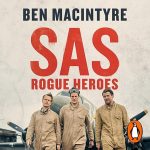
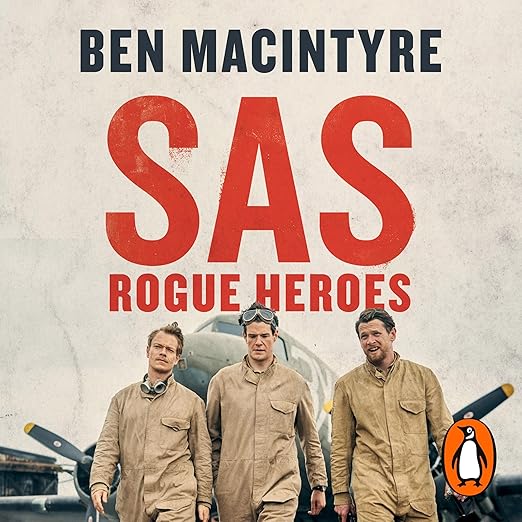
Ben Macintyre is one of the finest narrative historians working in Britain today, and SAS: Rogue Heroes is arguably his most accomplished book. I say this as someone who has listened to a great many military histories and found most of them dutiful rather than gripping. This one is different. Macintyre tells the story of the SAS’s founding – born from the boredom and lateral thinking of a hospitalised young officer in 1941 – with the same propulsive verve he brought to his books on wartime spies. The fact that he narrates it himself, in a composed and intelligent voice, makes the audiobook edition the definitive way to experience it.
The BBC series brought new audiences to this story, but the book came first and goes deeper. Macintyre had unprecedented access to the SAS war diary and conducted interviews with the remaining founder members. What he found is extraordinary: not just the daring of the operations, but the extraordinary cast of individuals who made them possible.
About the Audiobook
The story begins in the summer of 1941 with David Stirling, a lieutenant in the Scots Guards recovering from a parachuting accident, who uses his convalescence to draft a memo arguing for a new kind of warfare – small groups of highly trained men operating behind enemy lines, attacking airfields and supply lines in the Western Desert. Winston Churchill, characteristically, loved the idea. British High Command, characteristically, loathed it.
What follows is the story of how the SAS came into being, and of the remarkable, often reckless men who built it. Paddy Mayne, decorated beyond measure and deeply troubled; Jock Lewes, who invented the explosive device that would become the SAS’s calling card; the navigating genius Mike Sadler, still alive at the time of writing, the last man standing from those early operations. Macintyre gives each of them full biographical weight, so that when they are killed – and many are – you feel it.
At 13 hours and 15 minutes, this is a substantial listen, but it never drags. The research is meticulous, the storytelling is alive, and the moral complexity – the cost of creating an organisation built on controlled violence – is never glossed over.
The Narration
Macintyre narrating his own work is a genuine pleasure. He reads at a pace that respects the listener’s intelligence, never overplaying the drama but trusting the material to carry its own weight. His pronunciation of names and places is authoritative, and there is a quiet enthusiasm in his voice that makes the research feel fresh rather than rehearsed. For those who have heard him speak at literary festivals or on the radio, this is exactly the voice you would hope for.
What Readers Say
The audiobook holds a 4.7 rating, with listeners consistently praising both the quality of the research and Macintyre’s ability to make it read as well as a novel. “By far the best book on the SAS in World War II,” wrote historian Antony Beevor – a judgment shared by reader after reader. One reviewer described it as “impeccably researched, superbly told”; another found the character analysis – the study of what drove these men to such extremes – as gripping as the operational narrative. Even those familiar with the history report discovering things they did not know. The consensus is that it is a book that repays multiple listens.
Who Should Listen?
Essential listening for anyone interested in the Second World War, in British military history, or simply in the kind of narrative nonfiction that reads as well as the best fiction. If you enjoyed Macintyre’s previous books – Operation Mincemeat, Agent Zigzag – you already know what you are in for. If this is your first Macintyre, it is an excellent place to start.
Listen to SAS: Rogue Heroes on Audible UK – narrated by the author himself, which is how it should be.