Clara’s Verdict
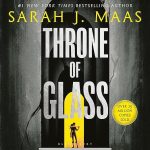
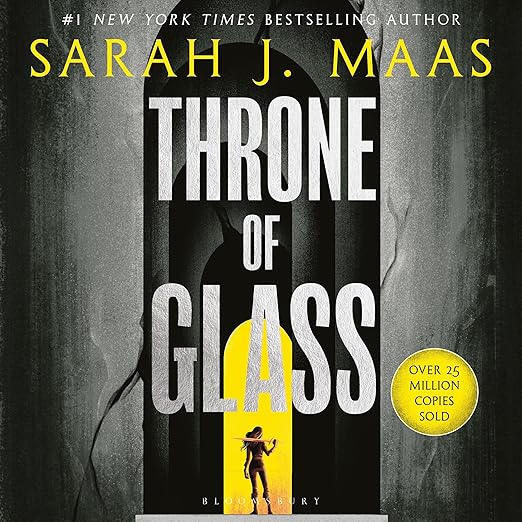
Let me be straightforward about the shape of this book, because the reviewers are, and because most of the disappointment I see around it comes from a mismatch of expectation. Throne of Glass is sold as an assassin novel. For a good half of its length it is a court novel with an assassin in it. Celaena Sardothien spends far more time navigating a palace, a competition and several complicated friendships than she does killing anybody, and whether that pleases or frustrates you will determine your whole experience.
I found the second half considerably stronger than the first, which appears to be the majority view. The 4.4 average from one hundred and seventy-four UK ratings is a modest score in a genre where inflation is standard, and I read that as honest rather than damning. This is a first book doing first-book work: building a world, introducing a large cast, and laying track for a series that grows substantially from here.
About the Audiobook
The premise is clean. Magic has gone out of the world, and an assassin is summoned to the castle. Celaena loathes the vicious king who rules from his throne of glass, but assassination is not the errand. She has come to win her freedom, and the price of it is defeating twenty-three murderers, thieves and warriors in a deadly competition, then serving as the King’s Champion. It is a strong engine, and Sarah J. Maas uses it to organise the first half of the book into a sequence of tests with a clear ladder of stakes.
The complication arrives when competitors start dying mysteriously, one by one, in ways the contest does not account for. Something rotten dwells in the castle, and Celaena’s fight for freedom becomes a fight for survival and a desperate hunt for whatever is killing people before it reaches the ones she has come to love. That shift, from tournament to mystery, is where the novel finds its energy, and it is worth staying for.
Throne of Glass opens the series of the same name and is the correct starting point for a long sequence. Bloomsbury’s production runs to thirteen hours and three minutes. Readers should also know that a set of prequel novellas exists, and that some listeners take those first, though the series is designed to be entered here. TIME called it one of the best fantasy book series of the past decade, which is a claim about the sequence rather than about this opening instalment, and the distinction is worth holding on to.
The Narration
Elizabeth Evans is the established voice of this series, and her approach here is notably restrained for a book with this much melodrama available to it. She plays Celaena at a slight remove, cool and self-possessed, which is exactly right for a character whose arrogance is a defence and whose vulnerability arrives late and unwillingly. A more emotive reading would have made the first half almost unbearable.
Her character differentiation is clean rather than showy. The central figures around Celaena are distinguished by cadence and weight rather than by accent tricks, and across thirteen hours that consistency is worth more than variety would be. Evans is particularly good in the competition sequences, where a run of structurally similar scenes needs to feel distinct, and she varies the tension rather than the volume to achieve it.
Where the performance genuinely rescues the book is in the slow first half that reviewers complain about. Court intrigue, wardrobe description and the establishing of a world’s rules are not naturally gripping material, and Evans keeps forward pressure on passages that read flat on the page. If you have attempted this novel in print and abandoned it, the audio edition is a reasonable second attempt.
What Readers Say
That below-par score for this corner of fantasy is explained by the written reviews with admirable clarity. They are worth reading in full, because the praise and the criticism are aimed at the very same feature.
This was a bit like reading two separate books in a way. I found it difficult to connect with the characters and the story in the first half, and it really dragged in parts.
Siobhan Davis, who still awarded four stars, made allowance for the fact that opening volumes must do world-building work but felt this one moved too slowly regardless, and had expected considerably more action than the description led her to anticipate. Hers is the most useful review on the listing. Against that, Danielle’s five-star response is pure devotion, written by someone who came to the novel after the prequel novellas and was still recovering from them. A German-language reviewer, writing as Listheen, arrived from Maas’s other major series, gave five stars, and said in effect that this one turned out to be even better than what she already knew, with characters, secrets and plotting that held her throughout. The split is consistent: patience is required, and those who supply it are rewarded.
Who Should Listen?
Start here if you want a long fantasy series to live inside, with a large cast, escalating stakes and a protagonist who changes a great deal over time. It suits listeners who enjoy court politics and slow-building romance as much as combat, and it is a sensible entry to Maas’s work for anyone who has heard the name and not known where to begin.
Approach with caution if you want immediate momentum. The opening hours are deliberate, and several reviewers who eventually loved the book nearly gave up during them. Anyone arriving from the author’s other series should recalibrate slightly as well, because this opening volume reads closer to young adult fantasy than what she has written since.
Commit to the first five hours before deciding. The book that emerges afterwards is a different and better one.