Clara’s Verdict
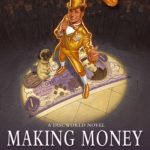
Every so often a publisher goes back to a beloved catalogue and does the job properly rather than cheaply, and this is one of those occasions. Making Money arrives here as a twelve-hour-and-fifty-one-minute recording from February 2023, read by Richard Coyle, with Bill Nighy taking the footnotes and Peter Serafinowicz supplying the voice of Death. I have spent a lot of my listening life with Terry Pratchett, and the thing that separates a serviceable Discworld audiobook from a genuinely good one is almost always the same question: what does the production do about the footnotes? This one hands them to a second actor, which is the right call.
The listener figures agree with me. A 4.7 average across 7,066 ratings is a strong number on a pool that size. My reservations are small, and they are about the listing rather than the recording. I will set them out shortly.
About the Audiobook
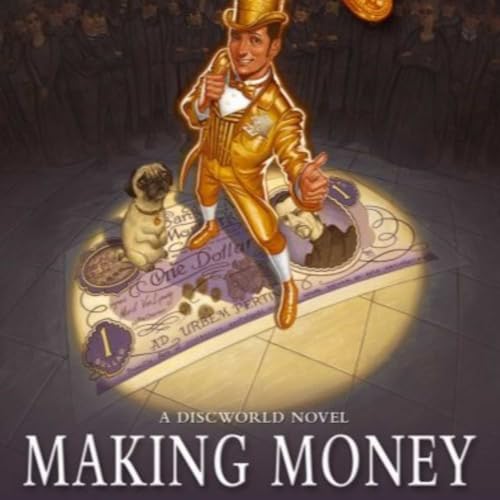
Ankh-Morpork’s Royal Bank has run into trouble and needs new management, and the man handed the job is Moist von Lipwig: Postmaster General, one-time confidence trickster, and entirely unwilling. The obstacles the publisher lines up for him are exactly the sort Pratchett enjoyed knocking over in sequence. There is a chief cashier who may well be a vampire, a chairman with a walking routine to be honoured, and something going on downstairs that nobody wants to discuss. The epigraph the publisher chose tells you what the book is really about, and it is a good one: ‘IF YOU COULD SELL THE DREAM TO ENOUGH PEOPLE, NO ONE DARED WAKE UP.’ Set that beside a bank in trouble and you have a novel about the confidence trick at the heart of paper currency, and about how little distance separates banking from stage magic.
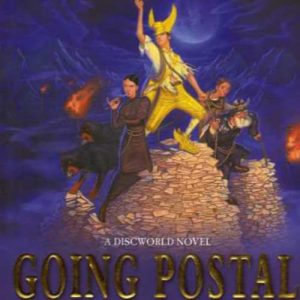
The listing places this at number thirty-six in Discworld, which makes it a very late entry in a very long sequence, and I would not pretend that is irrelevant. It also names Going Postal, the other Moist story Coyle has played on screen, so the strand this book belongs to is at least signposted for you. My one practical grumble is that the synopsis on the listing cuts off in the middle of a sentence about the Royal Bank, so if you are trying to work out the full shape of the plot before buying, the description will not get you there. I would note too that the publisher line reads Transworld Digital while the copy opens by crediting Penguin. That is a corporate wrinkle rather than a problem, but I would rather flag it than pretend the listing is tidier than it is.
The Narration
Richard Coyle comes to this with an unusual credential, and the listing states it outright: he took the part of Moist von Lipwig when Going Postal was adapted for television. That matters more than a casting-note curiosity. Moist is a character built entirely out of performance, a man whose survival depends on his ability to sound sincere on demand. The trap is the lovable rogue, a reading that flattens him into charm. What the part actually wants is a man improvising at speed and hoping nobody checks the arithmetic, and an actor who has already had to locate that pitch on camera arrives with the hardest decision behind him.
The footnotes are the real test, and I want to be clear about why. In print, a Pratchett footnote is a visual joke as much as a verbal one: your eye drops, the aside lands, you come back up. Audio has no equivalent gesture, and a single narrator reading footnotes in the same voice as the main text either has to signal them clumsily or let them blur into the narrative. Handing them to Bill Nighy solves the problem structurally instead of cosmetically. A different voice, a different rhythm, and the listener knows instantly that they have stepped sideways out of the story. The register a footnote wants is dry and slightly amused, and a second voice is what makes that register available at all.
Peter Serafinowicz takes the voice of Death, and the production also carries a freshly commissioned theme tune from James Hannigan. I am usually sceptical about theme music on audiobooks, since it tends to amount to branding, but on a series carrying this much accumulated affection it marks each session as an occasion rather than a chapter. Taken together the three voices turn a book into something closer to a company performance, which is the strongest case anyone has made for Discworld as a listening experience rather than a reading one.
What Readers Say
That average rests on a pool large enough to mean something, and the three reviews surfaced all come from long-standing Pratchett readers rather than newcomers. Pick of them is a five star response titled another sparkling Pratchett book, which gets at the substance neatly. It is, that reader writes, “the story of how to manipulate people to create an empire of money, based on pieces of paper”, with the welcome addition of familiar faces from elsewhere in the series. A second five star reader keeps it short and cheerful, offering that it is “Funny and a brilliant read but then you can’t go wrong with a Terry Pratchett book”.
The four star review is the honest one and deserves quoting in spirit. That reader admits to finding it impossible to rate Pratchett below five stars, since the whole shelf is a favourite, and marks this one down only on a preference the review begins to explain before the text runs out mid-sentence. The same review states plainly that it describes the ebook edition rather than this recording, and that the person writing it still occasionally collects the Discworld novels in hardback for the artwork. So the one dissenting voice available is a response to the novel, not to Coyle’s performance, and I would not treat it as guidance on the audio at all.
Who Should Listen?
If you have been circling the Moist von Lipwig books and want a production that treats the prose as a script rather than a transcript, start here. It suits anyone who enjoys a comedy of institutions, anyone with an interest in how money persuades people, and any Discworld reader who has found footnotes a nuisance in audio. Nearly thirteen hours is a fortnight of journeys, and the episodic pressure of the plot means you can leave and return without losing the thread.
Two caveats before you commit. Newcomers to Discworld can absolutely follow this, since the banking plot explains itself, but arriving at book thirty-six means the running jokes about Ankh-Morpork will pass you by, and that is a genuine loss rather than a snobbish one. And anyone who buys audiobooks purely on hours-per-credit should understand what they would be giving up here, because the cast is the point. Strip it out and you have simply bought a long novel.