Clara’s Verdict
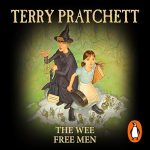
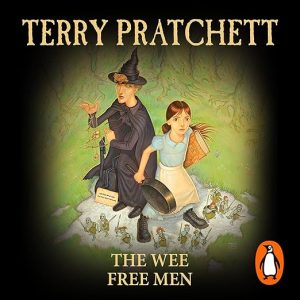
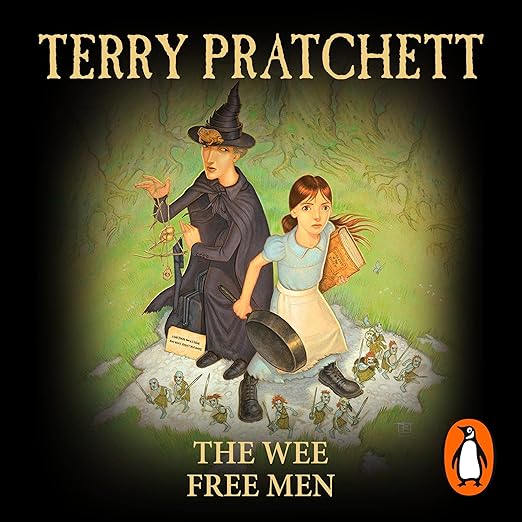
Terry Pratchett wrote The Wee Free Men for younger readers and, in doing so, produced one of the finest things he ever wrote. That is not a backhanded compliment. The Tiffany Aching sequence – this is Book 30 of Discworld and the first in Tiffany’s own arc – asks the same questions Pratchett always asked about power, responsibility, and the nature of witchcraft, but with a clarity and emotional directness that his more oblique adult novels sometimes sacrifice in favour of wit. Tony Robinson’s narration for RHCP Digital, at three hours and thirty-five minutes with a 4.8 rating from seven listeners, delivers exactly the experience this book should be: funny, frightening, and genuinely moving in the way that only stories about grief, competence, and the right use of a frying pan can be.
About the Audiobook
Tiffany Aching is nine years old, lives on the Chalk (a region of Discworld defined by its sheep, its flint, and its practical, unsentimental people), and has recently concluded that she is probably a witch. Her evidence is characteristically empirical: she thinks clearly under pressure, reads carefully, and has twice defended herself and others using a frying pan to decisive effect. When the monsters of Fairyland begin crossing into the real world – grimhounds, headless horsemen, the terrifying Jenny Green-teeth – Tiffany, armed with common sense and her frying pan, goes to stop them.
Her allies are the Nac Mac Feegle, also known as the Wee Free Men: six-inch-high, blue-tattooed, permanently aggressive, magnificently incompetent Pictsies who speak in a dialect that is partly Scottish, partly entirely invented, and wholly delightful. They worship Tiffany’s late grandmother, Granny Aching, who was the shepherd of the Chalk and, it transpires, a witch of considerable power who simply never told anyone. The relationship between Tiffany and the memory of her grandmother is the emotional heart of the book, and it is handled with a delicacy that earns every feeling it asks you to experience.
Pratchett’s fairy tale world is deeply strange in the best tradition. The Queen of the Elves is genuinely dangerous – beautiful and cold and entirely indifferent to human suffering – which matters because Pratchett, like Angela Carter before him, understood that fairy tales lose their power the moment they lose their threat. Tiffany does not save the day through magic. She saves it through stubbornness, observation, and the kind of clear thinking that her grandmother modelled and that Tiffany has been quietly inheriting all her life without ever being told she was doing so.
The Narration
Tony Robinson – Baldrick to a generation, though a far more versatile performer than that single role suggests – narrates with enormous warmth and considerable comic precision. The Nac Mac Feegle’s dialect is a particular technical challenge; each of them has a distinct personality while sharing a common speech pattern and a communal habit of getting into trouble, and Robinson navigates this without ever making the comic scenes feel laboured or repetitive. His Tiffany is quiet and observant – the narration respects the character’s intelligence without making her precocious – and his voice for the Queen of the Elves manages to be beautiful and quietly terrible simultaneously. This is the production the book deserves, from a narrator who clearly understands what Pratchett was doing.
What Readers Say
Rated 4.8 from seven listeners – a small but emphatic body of opinion. Pratchett doesn’t get any better than this, wrote one UK listener, with the laconic confidence of someone who has read everything Pratchett wrote and means it. A longer review praised the amazing vocabulary and the way Pratchett plays with words, makes them musical, noting that reading the prose aloud reveals qualities that silent reading can miss.
Several readers note the book’s particular value for younger readers – specifically young girls, for whom Tiffany provides a model of courage, intelligence, and practicality that is genuinely uncommon in fantasy fiction of any era. One reviewer from Japan noted that the book is only for children in the sense that it is accessible to them; adults will find it equally, and perhaps differently, rewarding – and more likely to recognise what Pratchett is doing with the Granny Aching subplot, which operates on a register that most young readers will only fully appreciate on a second reading years later.
Who Should Listen?
Young listeners aged ten and upwards, particularly those who have already encountered Pratchett elsewhere and are ready for his full range. Discworld readers working through the series who have reached Book 30, or who want to experience the Tiffany Aching sequence as a complete arc beginning here. Adults who have never read Pratchett and want an accessible and genuinely moving way in. Parents looking for something they can listen to with older children that does not condescend to either of them. At three and a half hours, this is also an excellent single-session listen. Find it on Audible UK – and then continue with A Hat Full of Sky without delay.