Clara’s Verdict
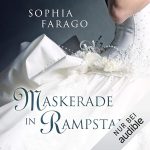
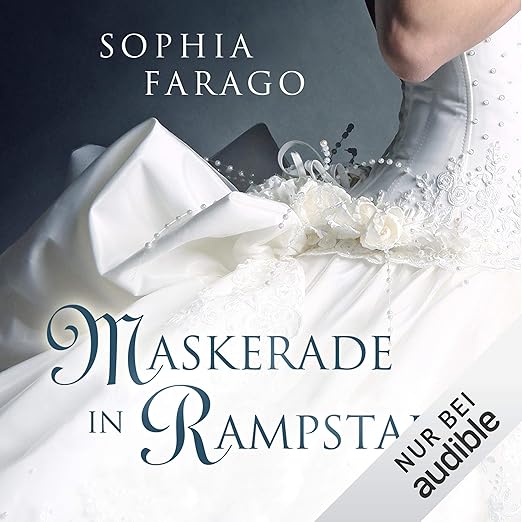
An audiobook of a novel about an opera house, handed to a working actor, is a slightly dangerous proposition. Maskerade is Terry Pratchett taking aim at a form built on grandeur, absurdity and the total suspension of common sense, and the temptation for any narrator would be to match the material by going large. Indira Varma does not. Across ten hours and five minutes she keeps the delivery cool and exact, and the comedy is funnier for it. This April 2022 recording is the one I would recommend to anyone approaching the witches strand of Discworld in audio.
The audience seems to have reached the same conclusion. The listing shows 4.7 from 6,272 ratings, and one reviewer puts the case for the casting more economically than I have managed: “Indira Varma reads the witches books well.” That is the whole review of the performance, and it happens to be right.
About the Audiobook
Ankh-Morpork’s opera house runs on music, theatrics and the presence of a masked Ghost who has never yet hurt anybody, and that arrangement holds until a run of backstage killings puts the season in doubt. Agnes Nitt, meanwhile, has come down from Lancre to make a career of her voice, and has walked straight into the oldest problem the form has. She does not, in the publisher’s own careful wording, quite look the part. Two witches would much rather she came home and joined their coven. The publisher’s chosen epigraph frames the book neatly: ‘There’s a kind of magic in masks. Masks conceal one face, but they reveal another.’
The listing marks this as number eighteen in Discworld, and the synopsis breaks off mid-sentence just as Granny Weatherwax and Nanny Ogg set out for the city, which is an irritating place for a description to stop. On reading order, the most useful pointer comes from a reviewer rather than the publisher: Agnes, that reviewer notes, appeared briefly in Lords and Ladies, and part of what drives her to Ankh-Morpork is the unwelcome interest the older witches have taken in her. You do not need that book to follow this one, but knowing it exists explains why Agnes is running.
What I like most about the premise is how specific its satire is. This is not a book that gestures vaguely at the arts. Its subject is an industry that asks for a magnificent instrument and then appraises the packaging, and the satire is affectionate rather than sneering, which is why the jokes land rather than curdle.
The Narration
Varma’s central task is holding three women apart, and they are three women who could easily blur. Granny Weatherwax and Nanny Ogg arrive from the same rural corner of the world on the same errand, which puts them on adjacent frequencies from their first scene, and a narrator who differentiates them purely by pitch ends up with a cartoon. Tempo and attitude are the more durable tools, and they are the ones that survive ten hours without wearing thin. Agnes sets the harder requirement. What she is capable of and what the world in front of her will allow are two different things, and the whole character sits in that gap. Conveying that gap without stating it is where the reading earns its keep.
There is an obvious trap in an opera novel, and I was watching for it. Singing sits at the centre of this story, and any narrator who starts actually performing the arias will break the spell within a chapter. The restraint on display here is the correct professional judgement: a listener’s imagination supplies a better voice than any performer could, and the prose is doing the work already.
The production surrounds her with support. Bill Nighy reads the footnotes, which in audio is the difference between an aside that lands and an aside that trips the listener, and Peter Serafinowicz stars as the voice of Death. James Hannigan has supplied the series with a theme tune of its own. The result is closer to an ensemble than a solo reading, which is a pleasing symmetry in a novel about putting on a show.
What Readers Say
Behind that average sit three reviews, two of them unreserved. The fullest, a five star response, gives the best account of the book’s texture, calling it full of “backstage gossip, quirky characters, and plenty of inside jokes about the arts” and rating it “one of the more self-aware entries” in the sequence. That is a fair summary and a useful warning at once: the self-awareness is the pleasure, and if you have no interest in the mechanics of putting on a show, a portion of the humour will pass you by.
The dissenting note comes from the four star review, and it is a specific, well-argued reservation rather than a grumble. That reader’s complaint is that unusually little happens: “not a lot really happens in it”, as the review puts it. He also finds that it behaves more like one of the Watch novels, a run of assaults and killings that the characters come at from different angles. I think that reviewer has identified something real. The plot is loose and the investigation is not urgent, and if you need forward momentum from a comic novel, that is the risk you are taking. It is the one complaint on the page I would take seriously before buying.
Who Should Listen?
Anyone who has ever sat through an opera, worked backstage, or simply enjoys watching an institution take itself extremely seriously will get a great deal out of this. It also happens to be a good place to meet the witches, since Agnes is a newcomer to the coven’s orbit and the book explains her situation as it goes. Ten hours is a manageable commitment by Discworld standards, and the murder plot gives the whole thing enough shape to keep a distracted listener oriented.
Set it aside if your taste in comic fantasy runs to plot, because you will feel that slackness around the midpoint. I would also hesitate to hand this to someone whose only exposure to Pratchett has been the city guard novels, since the pace here is slacker and the satire is aimed at a much narrower target. Approach it as a comedy of company politics that happens to have a corpse or two in it, and the ten hours pass beautifully.