Clara’s Verdict
Most audiobooks credit one performer. This one credits three and a composer. Sian Clifford narrates, Bill Nighy reads the footnotes, Peter Serafinowicz is the voice of Death, and James Hannigan supplies a new theme tune. That is not decoration. It is a publisher deciding that a Discworld novel is a production rather than a reading, and it is the first thing I would tell anyone weighing this one up.
The second thing is a warning, and it does not come from me. Two of the three reviews on this listing open by telling newcomers to go elsewhere first, and I am with them. This is book twenty-six, it draws on a thread of earlier novels built around Death and his granddaughter Susan, and it is doing something formally ambitious enough that arriving cold would mean watching a very good conjuror from behind.
About the Audiobook
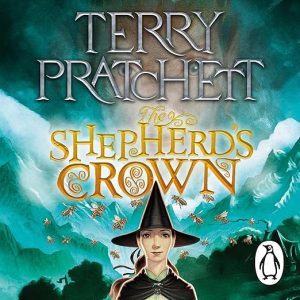
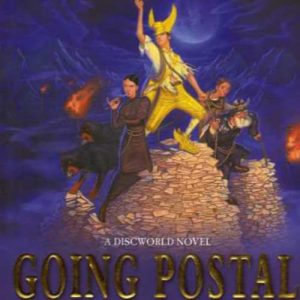
Eleven hours and twenty-one minutes, issued by Transworld Digital on 27 October 2022, with Penguin credited at the head of the description. The premise is Pratchett at his most structurally playful. On the Discworld, keeping tomorrow arriving on schedule is the responsibility of the History Monks. Somebody is building the world’s first genuinely accurate clock. Lu-Tze the monk, Lobsang Ludd the apprentice, and Susan, who is Death’s granddaughter, have to stop him finishing it, and the publisher’s copy gets as far as beginning to explain why before the text on the listing is cut off mid-sentence. I will leave the reason where the listing leaves it.
The epigraph the copy chooses is the one I would have chosen too: “The perfect moment is now. Be glad of it.” A novel about the mechanics of time that comes to rest on a piece of plain advice is a fair summary of what Pratchett was doing by this stage of his career, which was writing moral fiction with jokes in it rather than jokes with a moral bolted on.
On reading order, the listing gives this as number twenty-six of the Discworld sequence, and within that sequence it belongs to the strand where Death and Susan carry the story. One reviewer here names Small Gods and Hogfather as the two to have behind you, along with the other books in which those two characters take a leading part. That is advice from a reader rather than from the publisher, but it matches the way the novel behaves, and I would follow it.
The Narration
Sian Clifford carries the narration, and the description flags her BAFTA and her work on Fleabag, Vanity Fair and Quiz. Those are useful reference points, because what she brings is an actor’s precision about where a sentence turns rather than a reader’s evenness. Pratchett’s prose is full of small ambushes, clauses that appear to be heading one way and arrive somewhere else entirely, and Clifford plays them without flagging them in advance.
Handing the footnotes to Bill Nighy is the production’s cleverest single decision. A footnote is an interruption by definition, and giving the interruption its own actor turns a device that can feel fussy in audio into a running joke with a personality attached. Casting Peter Serafinowicz as Death is the other structural call, and structural is the right word rather than decorative: Death is a recurring presence across the series with a manner entirely his own, and letting a narrator do an impression of him would have flattened the one character this book cannot afford to flatten.
James Hannigan’s theme is the element I expected to find superfluous and did not. It sets the register before a word is spoken, and it makes the recording feel like something that was made rather than a file that was processed. My only reservation about the whole arrangement is that a multi-voice production draws attention to itself, and there are passages here where I caught myself admiring the assembly instead of following the story. That is a modest tax on a genuinely handsome piece of work.
What Readers Say
I have already mentioned that warning, so here is the substance underneath it. Eve’s title says outright that this is a favourite which does not work as an entry to Discworld; the review sets out the prerequisites plainly, and only then praises what Pratchett does with them.
Pratchett has always been a master of the montage, with small scenes adding up to a narrative.
Morpork, writing in March 2026 and claiming only to be a fairly seasoned Pratchett follower, gives the best account of the book’s method I have read anywhere:
he takes Time itself like an origami sheet, folds it thus, tucks this bit in here, extends that bit out there, inverts it, nips a bit off there
The sentence runs on considerably further and is cut off on the listing before it reaches an end. The third review is the calibrating one. Its author awards five stars while writing that this is “Not the best DW book, but better than most other books”, and singles out the Sweeper, rule one, the Procrastinators and the Abbott. That is exactly the right temperature for a novel this deep into a long series: not the summit, comfortably above the surrounding landscape. An average of 4.7 across just under seven thousand ratings is consistent with it. What none of the three does is assess the performances, which, given the ambition of this production, is the one thing I would have liked from them.
Who Should Listen?
Start somewhere else if you are new to the Discworld. That is the advice of two of the three people who reviewed it here, and the novel’s pleasures really are constructed on top of earlier ones. If you have the Death and Susan books behind you, this is a rich and formally daring entry, and the production around it is the best argument I know for taking a Discworld novel in audio rather than in print.
There is one listener I would recommend it to who is not a Pratchett reader at all: somebody who loves audio drama and multi-voice productions and has never quite understood the fuss about this series. The assembly here is good enough to be worth hearing on its own terms, and eleven hours is a fair exchange for a production of this quality. Anyone who prefers a single steady voice for a long book, on the other hand, should know exactly what they are buying before pressing play.